Adoption of Automation and Technology – the risks and rewards

In doing a deeper dive into the topic of automation, we spent some time at our recent 40th anniversary Open House event looking at the keys to adopting automation in the manufacturing industry. Overall, we see automation and robotics as one means of addressing the challenging labor market that manufacturers face.
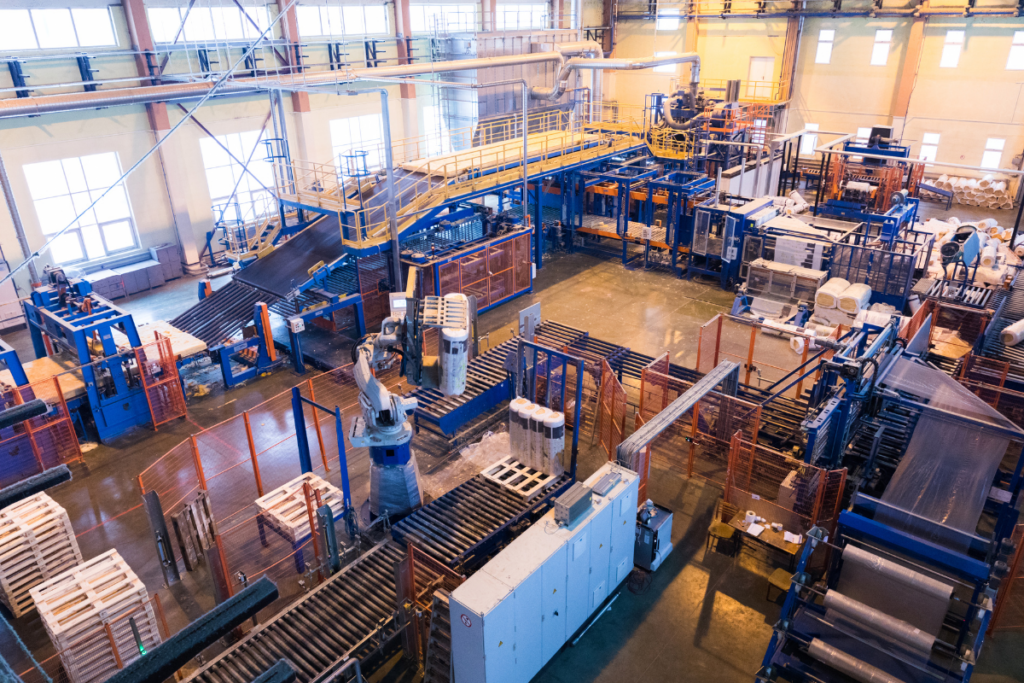
Often, we hear company leaders say something like, “I know I need (or want) to automate,” but they may not have fully considered that first critical step — the “why” for a company to consider such changes.
Let’s Begin…
Our advice is to embrace automation and other upgrades in technology, but remember that it’s important to walk first and then run later.
The discovery phase for a business looking to upgrade its technology usually begins with a fundamental question. What’s the biggest problem that has led a company to consider this change? And, in that context, is there a piece of equipment in existence that will solve that problem?
If there is currently no such equipment, the discussion then goes to how we might work with a customer to use existing design principles but to modify the layout change functionality, or co-develop a customized piece of equipment to address that need.
There can be a temptation when a company decides to automate to try to go “full steam ahead.” Others approach the process at more of a crawl. As mentioned earlier, we recommend that it is better to walk before you run because there is a lot of discussion and evaluation that needs to accompany these upgrades. Then, there is a period of adjustment once the new improvements have been implemented. Many find that it is better to take this approach incrementally.
Sentiments Towards Automation in Warehousing, Distribution and Manufacturing, https://og.mhi.org/downloads/industrygroups/isc/technicalpapers/automation_summary3_11.pdf

Employees vs Automation
Given that advances in automation are driven by the workforce environment, the discussion should include how automation will impact personnel or the “head count.” There is a belief in some circles that adopting automation will reduce the number of employees that a facility will need—which may, in fact, not be true. Central to that consideration is this: Can the upgraded equipment be managed by the company’s present workforce? Often, at least initially, a company may not need fewer people but perhaps different people – an automation engineer, for example, or a project manager. A shift to greater automation levels is also a shift in a company’s knowledge base.
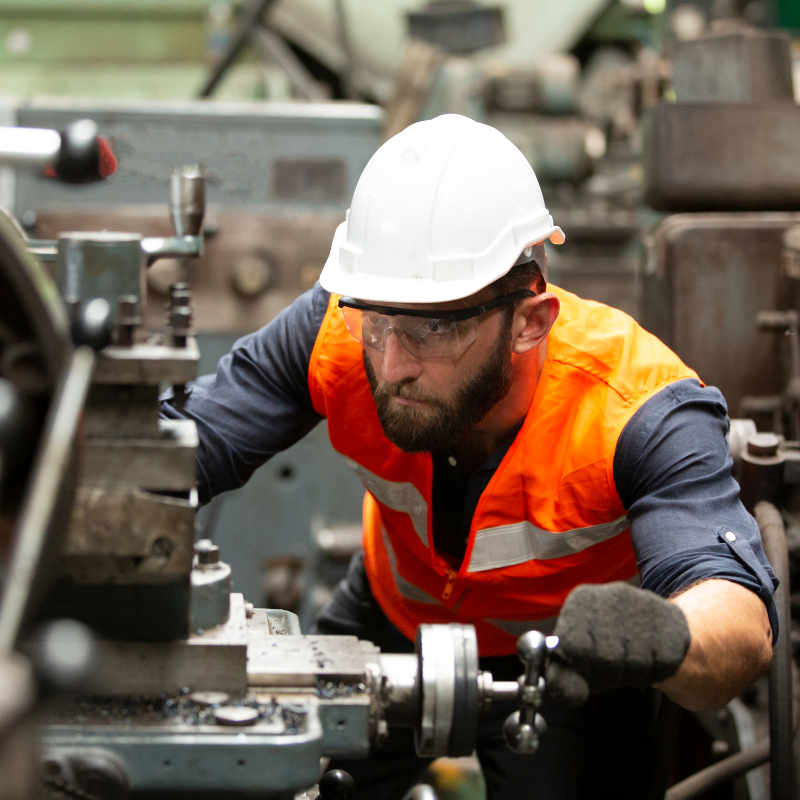
And interestingly, safety is the overwhelming reason cited when companies seek to automate, as opposed to productivity. Both, however, are good benefits from doing so.
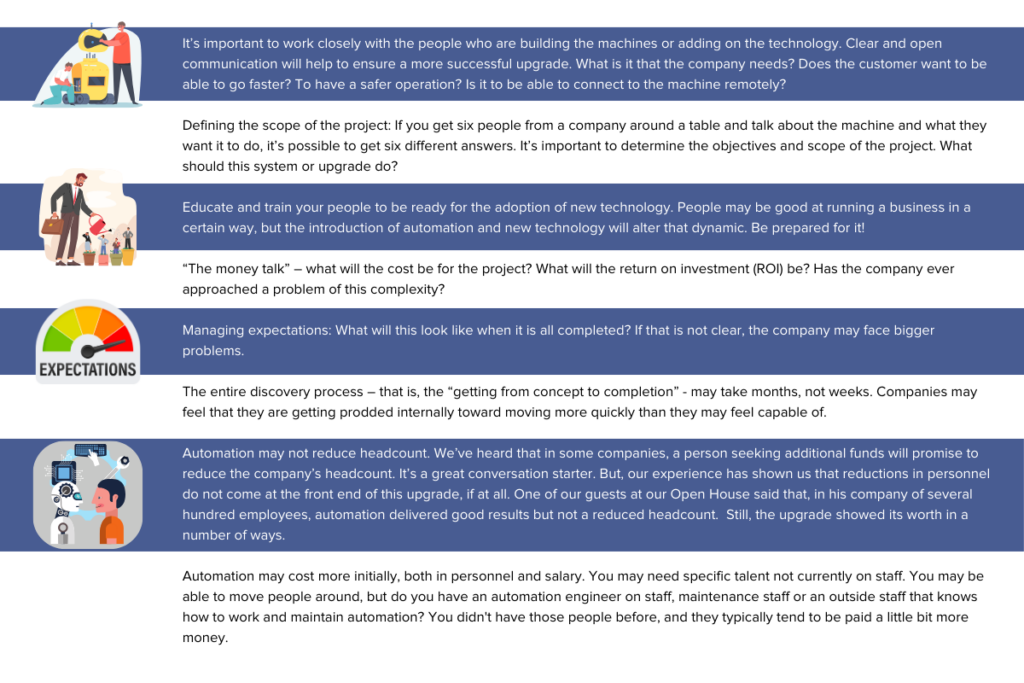
Some of the factors that a company should consider in upgrading are:

Integrating Automation in Material handling is efficient, safe, and ergonomic.
What we have concluded from our experience and our discussion
Automation offer many benefits for companies seeking to take that next step. It can improve safety, it can improve productivity, and it may well be necessary for companies that are facing labor shortages. Approach a potential upgrade strategically. Understand that the benefits you derive from it may not be a reduced headcount and that there will be some initial expenses – but that the benefits to be derived from automation should far outweigh the costs and the challenge of getting from “here” to “there.”
We’re happy to share our thoughts on taking those next steps. If you have questions and would like to discuss this in more detail, please contact Cherry’s Industrial Equipment at 847-961-2104 or email [email protected]. We offer a wide range of equipment, including pallet inverters, pallet upenders, stretch wrappers, pallet dryers, automated pallet movers, pallet dispensers, pallet changers, load transfer equipment, pallet washers, and more. We’re here to help!