Beverage Industry Warehouse Solutions for Speed and Safety

The beverage production and distribution industry has unique operations and equipment needs to ensure streamlined workflow and efficiency. However, production managers also face particular beverage warehouse challenges that require tailored material handling equipment solutions.
This guide to how to improve beverage warehousing efficiency will examine some of the top issues in the industry. Whether you’re looking to increase production speed, reduce workplace injuries or maximize your warehouse layout, this guide will help you find the right material handling and safety equipment solutions for your business.
Learn more about how Cherry’s Industrial Equipment can support your beverage warehousing operation in increasing productivity, safety and efficiency.
Jump to Sections:
- 7 Common Beverage Industry Warehouse Challenges
- 5 Solutions to Increase Speed and Efficiency in Beverage Warehouses
- 4 Solutions to Increase Worker Safety in Beverage Industry Warehouses
- Why Choose Cherry’s Industrial Equipment for Beverage Warehousing Solutions?
- Contact Cherry’s Industrial Equipment for Help Improving Beverage Warehouse Operations
7 Common Beverage Industry Warehouse Challenges
The global food and beverage supply chain has undergone significant shifts in recent years to improve efficiencies and consolidate markets. Dedicated beverage warehouses, in particular, face unique challenges in managing high volumes of product, as well as increased need for distribution speed and accuracy.
To improve beverage warehouse operations, distributors must develop a solid understanding of the most common challenges they face. Below are seven of the top beverage warehouse challenges managers face today.
1. Lack of Space
The beverage industry has experienced explosive global growth in recent years, with an expected compound annual growth rate (CAGR) of 7.02% from 2021 to 2026. Because of the increased market demand, beverage distributors face a significant shortage in warehouse space in order to accommodate the growing product volumes.
To keep pace with the ongoing growth in the beverage market, production managers need to find ways to maximize the warehouse space they currently have. Inefficient warehouse layouts and poor physical design can result in paying for warehouse space that’s going unused. By finding creative ways to free up warehouse space, managers can reduce the impact of this critical challenge in the beverage industry.
2. Complex or Outdated Equipment and Machines
In an increasingly competitive marketplace, businesses must gain every operational advantage possible. One of the factors that impacts operations is old or outdated equipment and processing machines that cause inefficiencies. Complex machinery is difficult to operate and takes longer to learn. These machines are often based on previous generations of operational procedures and are less compatible with modern warehouse management workflows.
Additionally, outdated equipment is more at risk of unexpected breakdowns, causing costly downtime that impacts the bottom line. Warehouses may spend too much time and money repairing older equipment. This causes production managers to bring on additional labor to make up for lost productivity.
3. Bulky or Unwieldy Products
When managing any type of inventory, it’s important to take precautions to ensure the quality and safety of the goods during handling and storage. With beverage products, it’s critical to ensure the goods are properly packaged to maximize safety. Improper packaging causes beverage products to become too bulky or unwieldy, increasing the risk of product loss. Bulky items are not only more difficult to handle safely, but they’re also more difficult to stack and store in a way that consolidates warehouse space.
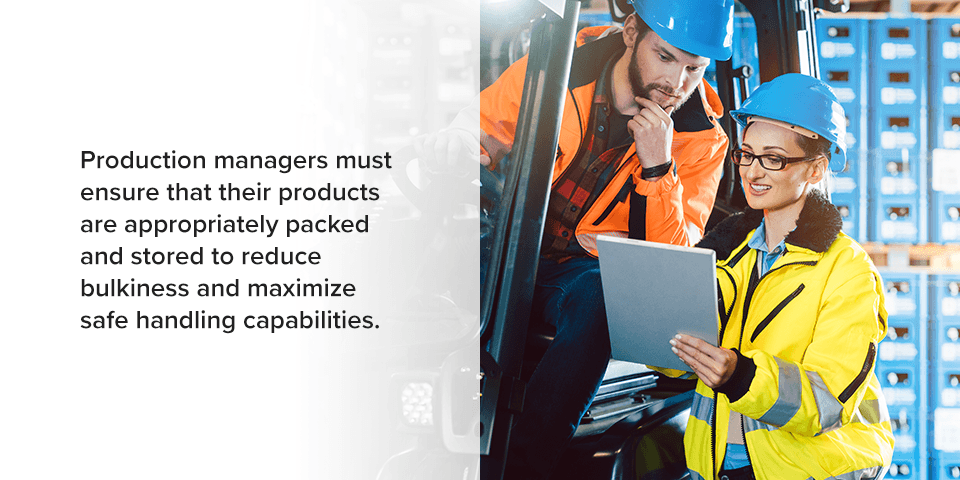
Production managers must ensure that their products are appropriately packed and stored to reduce bulkiness and maximize safe handling capabilities.
4. Worker Injuries From Material Handling
In the beverage industry, warehouse workers are at risk of injury due to various inefficient material handling practices and poor quality equipment. Not having the right equipment or improperly using equipment for its intended purpose can lead to worker injury. Additionally, not using material handling equipment and instead relying on manual procedures can also increase the risk of injury.
Injuries related to material handling can range from minor muscle strains to severe injuries or fatalities, such as struck-by hazards from forklifts and other equipment. Workplace injuries due to material handling accidents can cause significant financial, legal and corporate culture challenges to businesses in the beverage industry.
5. Wood Pallet and Equipment Shortages
One of the most significant challenges that affects the beverage distribution industry is the shortage of warehouse and equipment supplies. Without access to enough storage and distribution products, production managers are unable to maintain a steady and productive workflow.
Beverage warehouses may face a shortage of material handling and transport solutions, like wood pallets, containers and other storage solutions that help improve efficiency and space usage. Global supply chain issues may also reduce the availability of lift trucks and parts, which can impact warehouse workflows. Shortages of these materials and equipment solutions cause overhead costs to increase, affecting the business’s bottom line.
6. Supply Chain Gaps Due to COVID-19
The COVID-19 pandemic is creating ripple effects throughout the global supply chain, impacting nearly every industry and business. As a result, warehouses, including those in the beverage industry, face numerous supply chain gaps that affect operations. Warehouses may confront lagging inventory shipments followed by sudden logistics surges that overwhelm the workforce.
As a result, warehouses have to transform their operations to accommodate the new reality facing the global supply chain. Innovative beverage industry logistics, including the flexibility provided by 3PLs, will be increasingly necessary when adjusting to supply chain challenges in the post-COVID-19 era.
7. Increased Demand for Food Traceability
In an increasingly more regulated environment, there is a corresponding growing demand for food traceability. Customers are prioritizing compliance and asking suppliers to provide greater food and beverage safety transparency.
End-consumers are increasingly more concerned with food and beverage contamination. This responsibility then falls to the distributors to ensure that food and beverage safety procedures are followed and documented to provide consumers with peace of mind. Beverage warehouses must find ways to provide more food traceability at higher standards to avoid legal implications and protect brand images.
5 Solutions to Increase Speed and Efficiency in Beverage Warehouses
In beverage industry warehousing, production managers must find ways to increase productivity while protecting workers from injuries and preventing product loss. Managers also need solutions that help increase workflow without sacrificing precious warehouse space.
Below are five material handling solutions for beverage industry warehouses to increase speed and efficiency.

1. Plastic Pallets
A sufficient supply of plastic pallets is one of the core material handling solutions that beverage warehouses need to increase speed and efficiency. With current supply chain shortages, distributors are facing a shortage of wood pallets. Investing in a supply of plastic pallets can help overcome this ongoing challenge.
Plastic pallets are reusable, which reduces consumption, prevents supply issues and saves money over time. Additionally, plastic pallets are sanitary and hygienic, making them the perfect material handling solution for the beverage industry. Plastic pallets also help to address packaging challenges by providing a better and safer way to organize stored goods.
Update your beverage industry warehousing with clean and long-lasting plastic pallets from Cherry’s Industrial Equipment.
2. Pallet Inverters
Increase material handling speed and safety with pallet inverters. By allowing workers to move products in and out of the warehouse quickly, pallet inverters maximize productivity and efficiency. With pallet inverters, workers reduce the time spent stacking and restacking pallets to move them safely.
Pallet inverters lift, rotate and tilt stacked pallets, saving time and preventing worker injuries. Using pallet inverters also helps to protect beverage products, preventing costly product loss. Pallet inverters provide a substantial return on investment in both productivity and product safety compared to manual processes.
Speed up pallet swaps and load transfers with pallet inverters from Cherry’s Industrial Equipment.
3. Pallet Changers and Pallet Dispensers
Maintaining worker safety in the warehouse is critical to all beverage distribution operations. Investing in the right material handling solutions can significantly reduce the risk of workplace incidents related to strenuous manual labor. Two material handling solutions for improved workplace safety are pallet changers and pallet dispensers.
Pallet changers safely transfer loads without the need for manual processes or fork lift trucks, reducing the risk of injury while efficiently handling high volume loads. Similarly, pallet dispensers help to reduce manual lifting related injuries while saving floor space.
Automate your pallet handling processes with pallet changers and pallet dispensers from Cherry’s Industrial Equipment.
4. Custom Machine Solutions
Custom material handling solutions are designed for the unique needs of specific industries. By investing in custom equipment, beverage industry warehouses can get the tailored solutions they need that address their workflow and storage requirements.
The beverage industry depends on efficient processes that move, assemble and package goods quickly. To support the fast and streamlined moving of palletized goods, beverage production managers can work with our industry experts to devise custom solutions that best meet each operation’s needs.
Learn more about custom beverage industry warehouse solutions from Cherry’s Industrial Equipment.
5. Warehouse Layout Optimization
Creating an efficient warehouse layout is critical in the beverage industry. With warehouse storage space being at a premium today, businesses must maximize their existing space to efficiently stock and manage products while continuing to meet ongoing consumer demand. Production managers need the right space-saving and material handling solutions that reduce bulk and streamline processes to optimize beverage industry warehouse design.
One of the top warehouse layout tips for the beverage industry is to create workflow zones that are strategically positioned and leverage essential material handling equipment. From load transfer solutions to workstation lift tables to pallet washing equipment, there are many ways to optimize your warehouse layout to encourage better use of space.
4 Solutions to Increase Worker Safety in Beverage Industry Warehouses
Prioritizing workplace safety is critical to protecting workers and reducing financial and legal liability in the beverage industry. To make warehouses safer for workers, managers must be aware of some of the top hazards that threaten workplace safety. From repetitive motion injuries to accidents with improperly used equipment, the warehouse can be a hazardous place without the right solutions and protocols in place.
Below are four top solutions for how to improve warehouse safety in the beverage industry.
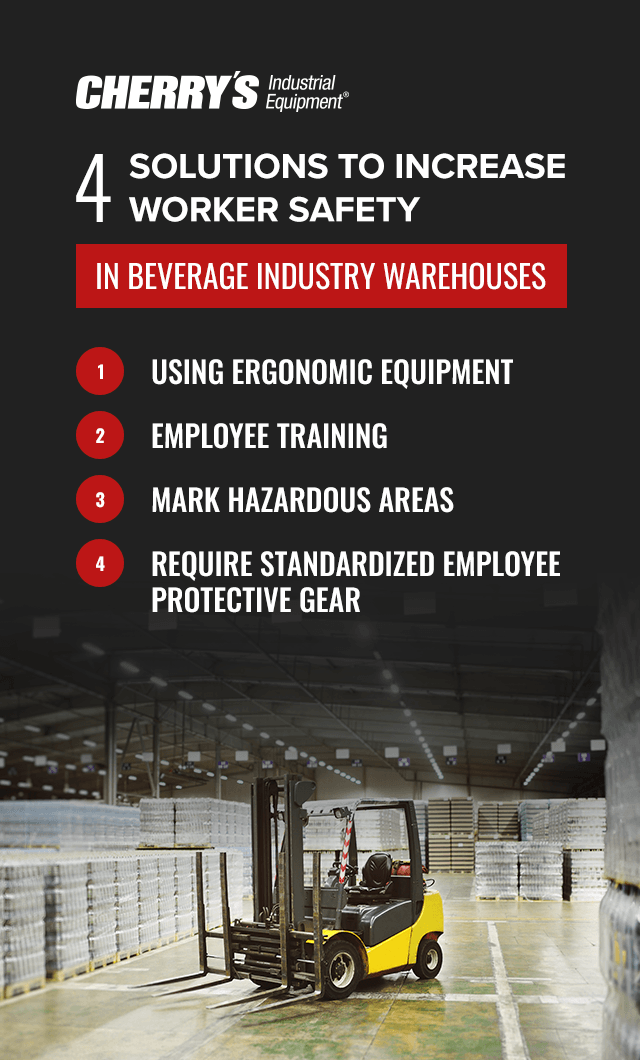
1. Using Ergonomic Equipment
One of the simplest ways to improve warehouse safety is to migrate away from processes that require manual labor and adopt technology and equipment that’s ergonomic and efficient. Ergonomic warehouse equipment is designed to reduce or eliminate strenuous manual effort.
With ergonomic equipment, workers avoid heavy lifting and repetitive movements that otherwise lead to musculoskeletal disorders. Because ergonomic equipment reduces injuries and increases efficiency, it’s one of the essential beverage warehouse solutions for speed and safety.
2. Employee Training
In the warehouse, workers face increased risks of incidents when they are either struck by or caught in between moving equipment parts. Often, these incidents occur when workers are improperly trained on how to use equipment and follow safety protocols.
Operations managers should be vigilant about the major threats to warehouse worker safety to increase warehouse safety in the beverage industry. Having proper safety and equipment training procedures in place can significantly reduce the risk of these types of workplace injuries.
3. Mark Hazardous Areas
To prevent workplace injuries, warehouses should provide clear visual indicators that identify workplace hazards. Marking warehouse hazards is necessary for compliance with Occupational Safety and Health Administration (OSHA) workplace safety standards.
It’s important that warehouses display clear signage to alert workers to potential hazards, including whether standard personal protective equipment (PPE) is required for entry into certain zones. Floor markings and colored tape can also help to mark hazardous areas and alert workers to certain safety protocols that are required.
4. Require Standardized Employee Protective Gear
Wearing appropriate and fitted PPE is an essential way to increase worker safety in the warehouse. Workers should be trained on how to correctly wear and care for PPE, including knowing the types of PPE that need to be worn and when.
Standardized PPE, such as hard hats and high-visibility clothing, should be worn during particularly high-risk activities such as lifting pallets overhead and when loading or unloading at loading docks.
Learn more about machine safety and risk management services from Cherry’s Industrial Equipment.
Why Choose Cherry’s Industrial Equipment for Beverage Warehousing Solutions?
Cherry’s Industrial Equipment is a leading provider of warehouse material handling, space-saving and safety solutions. Our warehouse material handling equipment is used in beverage industry warehouses to maximize efficiency and workflow while reducing the risk of worker injury and product loss.
In addition to our leading equipment solutions, Cherry’s Industrial also supports our customers with a robust offering of post-sale services, including:
- Installations of industrial machines and equipment.
- Preventive maintenance to extend the service life of equipment investments.
- Training and startup assistance to ensure effective operations.
- Replacements parts supply and support.
- Onsite services, including inspections and troubleshooting.
All of the above post-sale services are backed by our free technical support and customer service that’s guaranteed for the lifetime of your machine. Our Cherry’s technical support team is available to continue to support your maintenance staff in any installation and operation needs.
Learn more about the extensive post-sale services and support that Cherry’s Industrial Equipment offers our customers.
Contact Cherry’s Industrial Equipment for Help Improving Beverage Warehouse Operations
Warehouses specializing in beverages face unique challenges in storage and workflow. Beverage industry warehouses require solutions that emphasize speed and efficiency while also protecting worker safety. For the best solutions to improve productivity in beverage warehouses, choose Cherry’s Industrial Equipment.
Cherry’s Industrial Equipment is an industry leader in industrial pallet handling solutions with extensive post-sale services and technical support. Contact a product specialist from Cherry’s Industrial Equipment today to learn more about our material handling equipment and solutions that increase speed and efficiency in beverage warehouses. Call us today at 1-888-750-3263 or fill out an online form.