Pallets 101: Plastic vs Aluminum

For decades, warehousing and industrial operations relied on pallets made of wood for their product storage and transportation needs. However, there are certain drawbacks to wood pallets, including limited durability, the occasional inability to meet today’s sanitation standards and potential injuries caused by wood splinters.
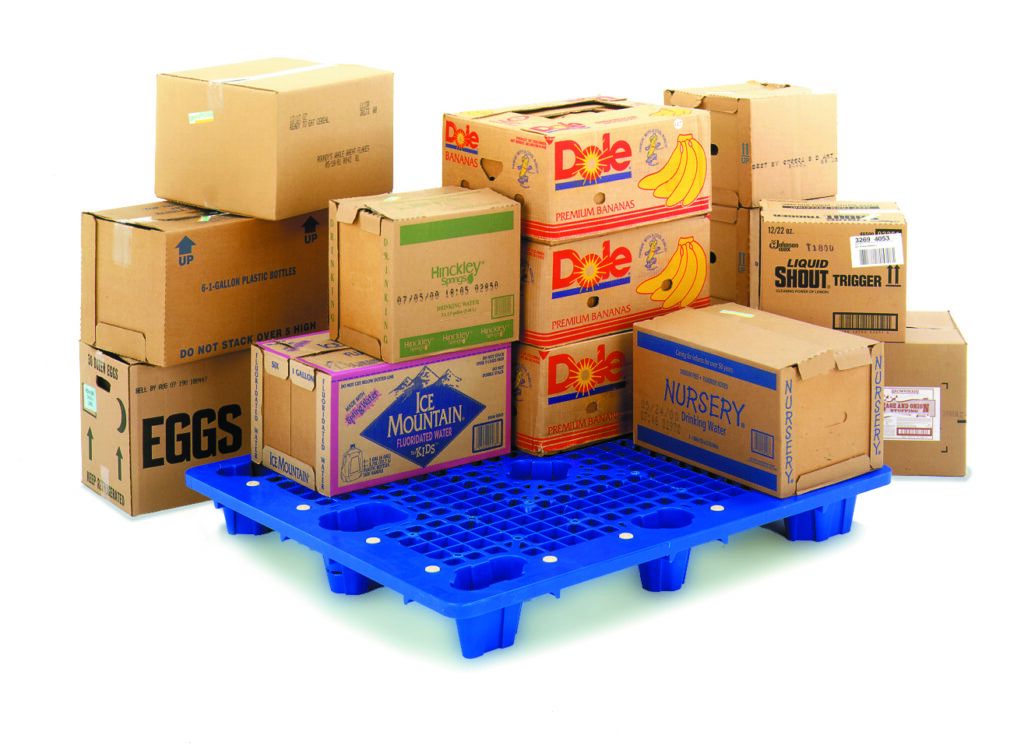
Plastic pallets, advantages:
- Plastic pallets are not porous and, therefore, easy to clean, wash or sterilize.
- Ideal for transporting pharmaceutical products and fresh or frozen foods – any products which must follow strict health guidelines. Industries specializing in food processing and bakeries also will find plastic pallets a good choice.
- Plastic pallets are less likely to break down than wooden pallets, making them good for storing and re-use.
- Plastic pallets have a longer lifespan than wood.
- Plastic pallets are more durable than wooden pallets.
- They are more “user friendly” for human handling as opposed to wood where there is a risk of splinters.
- They are a practical alternative for shipping to countries that do not allow the importing of wooden pallets.
- They are consistent in size because the product is molded. For automation, it’s imperative that each pallet be exactly the right size going down the conveyor. With high-speed automation, wooden pallets, which are more likely to vary in size and weight, could cause problems.
- Because these pallets are molded, they can be built in multiple sizes and capacities for specific functions or applications.
Plastic pallets and their challenges
- Maximum static capacity is about 30,000 pounds, dynamic capacity is 3,000 lbs, and edge racking is 2,200 lbs. which is less than what their wooden counterparts can store(up to 3000 pounds). However, plastic pallets can be molded with poly blends or with steel or fiberglass reinforcements to provide greater capacities.
- Plastic pallets have a higher initial capital cost, meaning that companies capitalize on the investment as opposed to looking at it solely as an initial expense.
- Some complain that plastic pallets are slippery and more susceptible to cargo “shifting” during transport. However, there are ways around this, with molded-in lips or rubber friction grommets to prevent the product from slipping.
- Plastic pallets can be nested, meaning they take up less room on the truck, and they are ideal for a returnable program.
- Plastic is flammable and may require special permits from the community’s local fire department. If you have empty pallets, you may be required to stack them at lower heights or add sprinklers. Again, there are workarounds — additives that can be put into the plastic pallets to make them fireproof.
- Plastic pallets cannot easily be repaired but can be very easily recycled. The pallets can be ground up and pelletized and used to make additional pallets. Many pallet manufacturers have adopted green, environmentally friendly strategies. At the end of the pallet’s life cycle, it can be sent back to the factory for recycling. This recycling helps reduce the overall costs of manufacturing these pallets. There are credits, for example, for food and pharmacy companies to have pallets reground and built into new pallets.
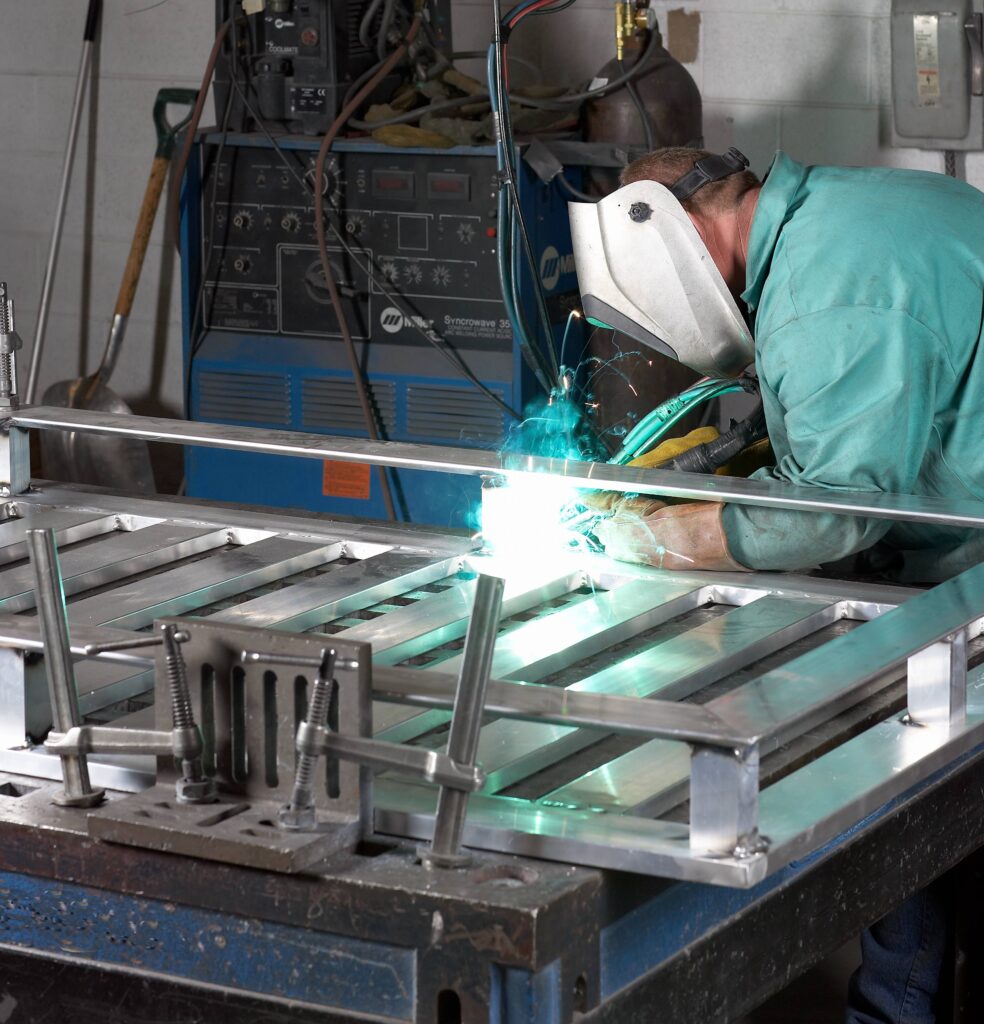
While pallets made of wood have been widely used in manufacturing and distribution facilities in the past, many companies are discovering the advantages of pallets constructed from alternative materials, including aluminum.
An aluminum pallet offers a lightweight material handling solution that can withstand the rigors of heavy use. Most companies that make the switch to aluminum pallets discover that aluminum pallets offer an excellent long-term return on their investment, which has a positive impact on their bottom line.
Aluminum pallets, advantages:
- They are lightweight and strong by design.
- They are durable, lasting up to ten times longer than plastic pallets.
- Recyclable as a precious metal. Any metal recycler will take in an aluminum pallet offering a price per pound, value subject to condition.
- They are fireproof, which may result in lower building insurance premiums.
- They will not rust or rot and are not likely to become infested with bacteria or insects.
- Some aluminum pallets are produced from recycled aluminum, meaning that when a pallet reaches the end of its life cycle, it can be recycled into another pallet.
- They are heavy-duty in construction (even though the pallet is lightweight).
- Where size and weight are concerned, the possibilities are limitless. We have seen 20’ pallets used in a specific application. We helped another customer with a workaround; they had a corporate specification that any load over 50 pounds required a two-person lift. With extruded aluminum, the pallet met their width capacities while dropping more than four pounds from the weight and thereby complying with their requirement. Such a workaround could not be accomplished with plastic.
- Aluminum pallets are less likely to chip away, whereas plastic pallets can causing problems in the storage and shipping of food products.
- Aluminum pallets have a longer life cycle than their plastic counterparts.
Aluminum pallets, disadvantages:
- They have much higher initial capital costs.
- They are noisy. In a warehouse, when an aluminum pallet is dropped on the floor, it’s much louder than a plastic pallet.
- They are heavier in weight than their wooden and plastic counterparts, which may result in higher shipping costs.
- They are better suited for a closed-loop system where returning the pallet is less of an issue.

Summary
For each warehousing or shipping need, there is much to consider in determining the best type of pallet for your needs. Price is one factor; durability is another. Most important, though, is this: which type of pallet is best for your needs?
Cherry’s can help you by discussing the advantages of each type in more detail, please contact Cherry’s Industrial Equipment Sales Department at 800-350-0011 or use the contact us form.
We’re here to help!