Food Service Warehouse Solutions

Warehouses specializing in food service products cannot always follow general advice for how to improve warehouse efficiency. The products require careful handling and storage to maintain food safety. These types of warehouses also need to meet the needs of regulations and improving supply chains. Addressing these concerns should always start with an assessment of the safety and efficiency of the warehouse.
Jump to Sections:
- Top Issues Facing Food Service Warehouses
- Food Service Warehouse Solutions for Speed and Safety
- How to Prioritize Safety Within Food Service Warehouses
- Contact Cherry’s Industrial Equipment Today for Solutions for Food Service Warehouses
Top Issues Facing Food Service Warehouses
Food service warehouses face numerous concerns today in how they handle products, communicate with others in the supply chain, keep organized, boost product tracing and handle rising costs. These issues reflect the growing connectedness of the international supply chain and the need to ensure the authenticity and safety of food products within it. Meeting these concerns includes keeping the warehouse well-organized and sanitary.
Safety Concerns
Food safety is the utmost concern for a food-grade warehouse. Improper storage can cost money due to lost products. Depending on the type of food stored, conditions may need to control for pests, airflow, humidity levels and temperature. Plus, most foods have expiration dates that facility managers need to heed to ensure the goods move out in time to sell before their expirations.
Timing of product deliveries is essential for keeping food products safe. Delays in stocking cold products received can cause the food to warm past its optimum storage temperatures. Additionally, not keeping chilled or freezer storage sections consistently at their specific temperatures can compromise the safety of the food stored in them.
For instance, if freezer temperatures fluctuate too much, allowing for thawing and refreezing of products inside, freezer burn can develop. This condition negatively affects the quality of the product, and thawing can compromise safety. Proper airflow around products in cold storage can reduce temperature differences or fluctuations, ensuring safety and quality.
Supply Chain Inefficiencies From a Lack of Communication
Major problems in the food supply chain often stem from poor communication. To optimize food logistics, every member of the supply chain should have an open knowledge of where products are at any time. Using connected networks based in the cloud permit participants in the supply chain to openly connect from any device that can access the cloud-based platform.
Good communication with suppliers ensures products arrive at their final destination in time for consumers to use them before the expiration date. If a manufacturer experiences a delay in shipping products to a distribution warehouse, open communication allows the facility manager to adjust for the late shipment and prioritize sending those goods out to reduce the effects of the initial delay.
Unorganized Stocking Processes
Disorganization in a warehouse can lead to safety issues. If food products stay out of cold storage too long, bacteria can grow in the warmer parts of the food, leading to future product recalls.
Unorganized stocking processes can cause lost products due to not knowing their locations or creating delays that contribute to spoilage. Keeping track of products through a warehouse management system and proper facility layout can prevent many issues caused by poor organization.
Demand for Increased Transparency
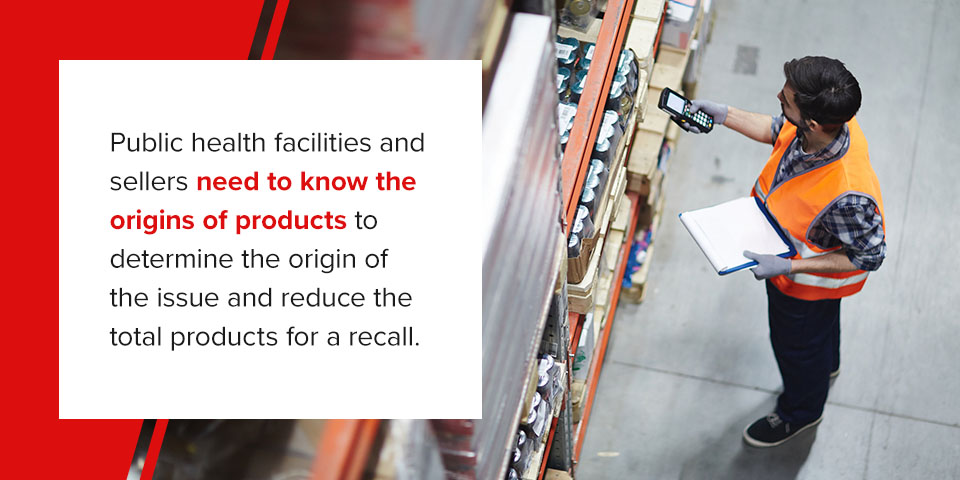
In cases of food recalls, traceability becomes essential. Public health facilities and sellers need to know the origins of products to determine the origin of the issue and reduce the total products for a recall.
If officials know that only lettuce grown at a specific farm in California caused cases of food poisoning, they can issue recalls for only products made with that lettuce instead of sending out a blanket recall of all lettuce-containing products. This type of pointed recall reduces loss from manufacturers and sellers.
Traceability is also essential for consumers who demand to know the origins of their food and its production. For example, consumers may want to know the country of origin for their fresh fruits and vegetables to ensure they purchase goods from nations they believe have stronger quality controls in place. Or they may need to know that their coffee came from a fair-trade farm.
Communication along the supply chain can also address the increased demand for traceability. That communication must also accompany quality warehouse organization that keeps track of where products came from, where they are stored in the facility and where they ship to.
Increasing Supply Chain Costs
Supply chain costs depend on several factors, any of which can cause a drastic increase in overall costs. Fuel prices, logistics costs, finding workers and using new technology at any stage of the supply chain can increase operating costs for that user, which get passed on to those farther along in the chain.
While some factors may be out of the control of warehouse managers, there are ways to reduce the impact of these contributors. Understanding existing costs can allow for cutting out waste. Optimizing warehouse operations to improve efficiency and cut out costs can also help.
Food Service Warehouse Solutions for Speed and Safety
There are several solutions to the most common issues with food service warehouse operations. These methods improve the speed of actions within the warehouse without risking food safety. By integrating these processes and equipment solutions, your warehouse can operate safely and efficiently.
Use Correct Temperatures for Improving Food Service Warehouse Safety
The best method of ensuring your stored food products stay safe is strictly controlling the temperature and humidity settings of the area. Using several thermometers around the storage area will ensure every portion of the storage unit has the same temperature. Warm spots in freezer units may dangerously raise the temperature of food products stored near them.
Another aspect of ensuring good temperature storage is using pallet spacers to increase airflow between items stacked for storage. The spacers allow for maximum air to flow around the products. This airflow carries the chilled air from the refrigerator or freezer to the products to prevent thawing.
Keep in mind that you’ll need to remove spacers when unloading pallets. With pallet and spacer retrievers, you save your workers from having to waste time manually unstacking and restacking loads to combine them or change pallets.
Heavy-duty models, such as the VBED pallet retriever, designed for use in cold storage sites with up to 24-hour a day use, can meet the demands of high use in busy warehouses or other food storage facilities. Using a pallet and spacer retriever to change out pallets also makes it easy to replace stained or dirtied pallets with freshly cleaned ones.
Adjust Layout to Improve Food Service Warehouse Efficiency
The layout of your warehouse directly affects the efficiency and productivity of your workers. Large, poorly arranged facilities will require workers to take more steps to store or retrieve goods. Minimizing the steps required of workers to stock and pull out pallets of products can reduce wasted time and improve efficiency. You’ll also reduce waste and mistakes by limiting how many people handle products before shipping out or going into storage.
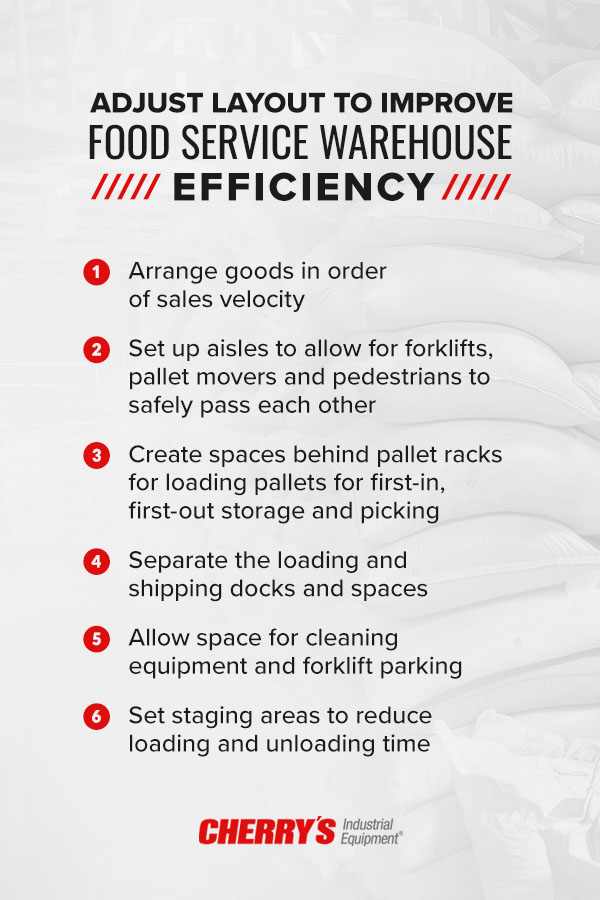
Here are other options for warehouse layout tips for the food service industry:
- Arrange goods in order of sales velocity with faster selling products closer to the front
- Set up aisles to allow for forklifts, pallet movers and pedestrians to safely pass each other
- Create spaces behind pallet racks for loading pallets for first-in, first-out (FIFO) storage and picking
- Separate the loading and shipping docks and spaces
- Allow space for cleaning equipment and forklift parking
- Incorporate staging areas to reduce the time needed for loading and unloading trucks
Food service warehouse layout can optimize movement, reduce collisions with forklifts, improve worker productivity and prevent losses from wasted time.
Use FIFO as Storage and Shipping Solutions for Food Service Warehouses
For food storage, first-in, first-out or FIFO is a commonly used method of keeping products on shelves. Loading pallet racks occurs from the back with the newest products loaded onto the racks. For pulling products for shipment, workers pull pallets from the front of the racks. These products have been in storage the longest and need moving faster.
By using FIFO, products move quickly enough through the facility to avoid staying in storage past their expiration dates. Make sure workers have training in this method of storing and pulling food products to avoid waste and product loss due to expiration.
Speed up Material Handling to Improve Productivity in Food Service Warehouses
How quickly your workers handle materials will also affect total productivity in the warehouse. There are several ways to save time and reduce delays. In food service, delays in getting products properly stored could cause spoilage. Therefore, speeding up material handling can address the issues of losses and food safety.
One option to speed material handling is to use stretch wrappers to improve the tightness of wrappings. These machines also reduce workers’ effort and time. Automatic stretch wrappers pre-stretch the wrap up to 200%, a much greater amount than the 10% capable of manually wrapping products. With tighter wrappings from stretch wrappers, product loads are more stable and the time required is much lower than with wrapping by hand.
Automated pallet washers also reduce the time needed in keeping storage pallets and spacers clean and avoid cross-contamination. To remove pallet spacers quickly, inline automated spacer removers can connect to stretch wrappers to quickly transition pallets of goods from storage to being prepared for shipping.
Faster material handling can help mitigate some delays that may occur with weather or other supply chain members not meeting their delivery times.
How to Prioritize Safety Within Food Service Warehouses
A dedicated food warehouse needs to require special precautions of its workers to keep the products safe and workers healthy. Both storage containers and workers need to regularly wash to prevent carrying germs from one surface to another. Maintaining the temperature in cold storage is equally important for warehouses that have a freezer or chiller.
Maintain Adequate Sanitation of Pallets and Spacers
Start by choosing plastic pallets that you can send through washers to sanitize. Washable pallets permit reuse for food storage after cleaning. Stackable plastic pallets permit greater use of cold storage space by increasing vertical space. With the correct use of spacers between stacked goods, cold air can flow between layers of products stacked on pallets, ensuring that even products at the center can stay chilled.

Washers for pallets and spacers allow your workers to quickly clean and sanitize pallets for reuse with food products. Keeping storage conditions clean and sanitary reduces the chances of cross-contamination and prevents pests from invading the warehouse.
Require Workers to Practice Good Hygiene
Workers play important roles in the safety of the warehouse and the food stored in it. Train employees in good hygiene practices, starting with staying home if they have symptoms of a communicable disease. With those measures, you can maintain your workforce and avoid having staff call off sick. It’ll also keep your products protected from germs.
Another aspect of good worker hygiene is to encourage regular hand washing and wearing gloves when handling food directly. Provide plenty of stations around the warehouse for workers to wash their hands. Plus, encourage handwashing after meals and after using the restroom.
Regularly Check Temperatures in Cold Storage and Have Backup Options
The temperatures of cold storage units and standard storage warehouses need regular monitoring. Using temperature alarms to alert workers of cold storage units that exceed their necessary temperature range is one way to ensure proper cold storage. Conducting regular manual checks can also alert workers of temperatures that are slowly rising.
Temperature changes may occur if a door stays open too long or if cooling equipment begins to fail. Power outages can also cause the failure of cold storage chiller units. Backup solutions for power outages such as backup generators can reduce product losses caused by unexpected outages. Good maintenance of existing equipment can prevent problems with the system not keeping temperatures in the freezer or refrigerator storage unit consistent.
Clean up the Facility on a Regular Schedule
Regular cleaning of the facility is essential for preventing contamination of food products. To make the cleaning more efficient, the warehouse needs to have an open layout without clutter on the floors. Cleaning should remove any dust, dirt or food products from the floors to prevent germ spread and to discourage pests from entering the warehouse.
You should prioritize maintaining a cleaning schedule as much as keeping up with the care of cooling equipment and other warehouse products that need regular service. A cleaner warehouse promotes better food safety for everything stored in it.
Contact Cherry’s Industrial Equipment Today for Solutions for Food Service Warehouses
If you are interested in how to improve warehouse safety and operations for food products, find the solutions you need at Cherry’s Industrial Equipment. We provide you with an easy-to-navigate site to find exactly what you need to get the most out of your warehouse. Our high-quality products make finding a custom solution to solve 100% of your food service warehouse issues possible. After the sale, we continue to provide our customers with post-sale services that include installation, training programs, maintenance, bulletins and technical support.
Our goal at Cherry’s Industrial Equipment is to go beyond meeting your expectations to exceeding them. Contact one of our material handling specialists today to get the solutions you need to meet your food service warehouse challenges.