Lift Tables & Ergonomic Solutions — Adapting to an Aging Workforce
Posted: | Author: Cherrys Industrial
Sharing:
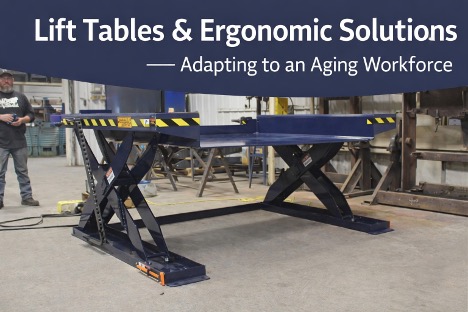
PART 1: Lift Tables & Ergonomic Solutions — Adapting to an Aging Workforce
The workforce is changing—and operations need to adapt.
Today’s labor pool spans a wider range of ages, physical capabilities, and experience levels than ever before. In many facilities, the reality is clear: you can’t always hire the “ideal” body type or physical stature for every role. And even if you could, it wouldn’t solve the long-term problem.
The workforce is aging. Physical demands remain high. And expectations around safety are rising.
The Hidden Cost of Manual Material Handling
Despite advancements in automation, manual material handling remains deeply embedded across manufacturing, food processing, warehousing, and distribution.
And it comes at a cost.

Manual handling injuries and overexertion account for billions of dollars annually in lost wages, workers’ compensation claims, and reduced productivity. These injuries are rarely caused by a single event—they are the result of repetitive strain:
- Bending
- Twisting
- Reaching
- Lifting heavy or awkward loads
- Repetitive motion over long shifts
These aren’t just safety issues—they’re operational inefficiencies.
You Can’t Automate Everything
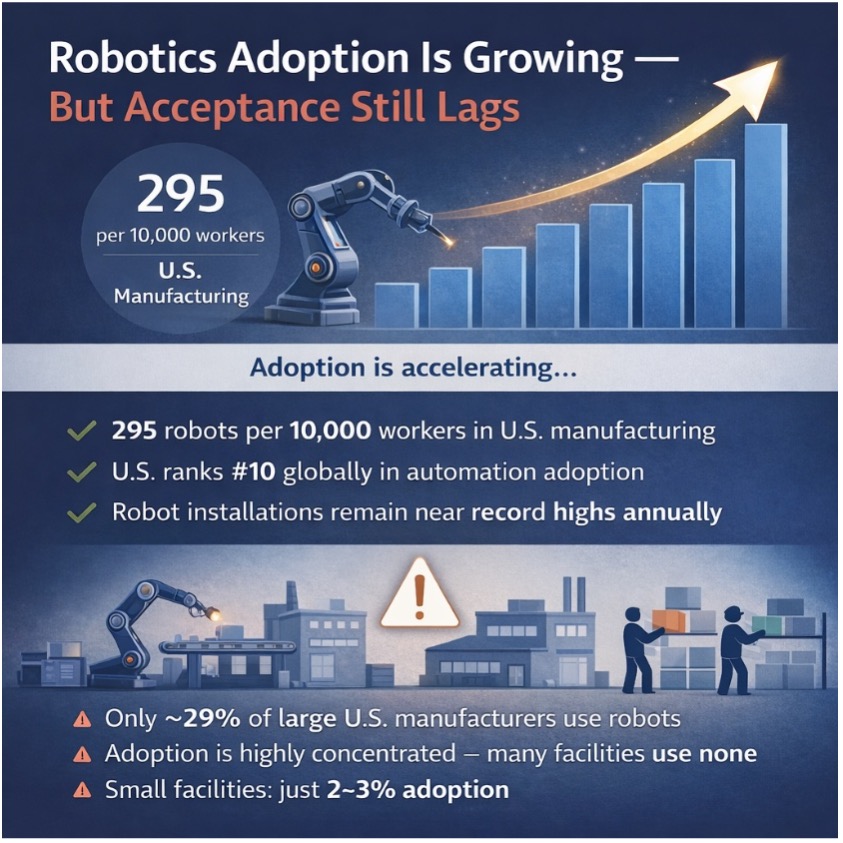
Robotics and automation continue to expand—but not every process can or should be automated.
There are still critical tasks that require human involvement:
- Product handling and inspection
- Batch processing
- Packing and sorting
- Sanitation and changeovers
This is where ergonomic solutions fill the gap.
Ergonomics Isn’t Optional Anymore
In Europe, ergonomic lifting solutions are standard—driven by nationalized safety regulations. In the U.S., adoption is accelerating as OSHA increases scrutiny and enforcement.
Facilities can be fined for unsafe practices, but more importantly, responsibility falls on plant leadership and safety teams to proactively reduce risk.
Solutions That Make an Immediate Impact
Ergonomic lifting equipment is one of the fastest ways to improve both safety and productivity.
Common solutions include:
- Lift Tables & Scissor Lifts – Position work at optimal height
- Work Positioners – Rotate or tilt loads for access
- Spring Lifts – Automatically adjust as weight changes
- Ergonomic Lift Systems – Reduce strain in repetitive tasks
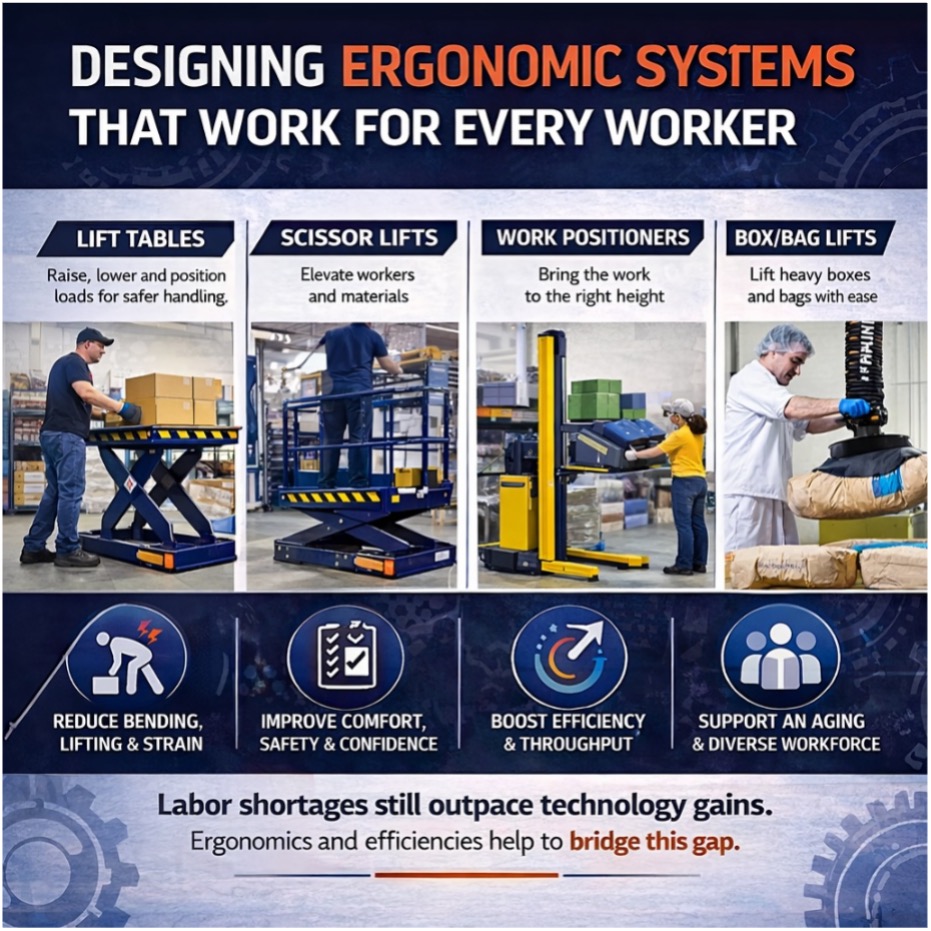
These solutions are designed to:
- Minimize bending and reaching
- Reduce heavy lifting
- Improve worker posture
- Increase throughput and consistency
Safety, Compliance, and Performance—All Connected
Ergonomics isn’t just about compliance—it’s about performance.
Facilities that invest in proper lifting solutions often see:
- Fewer injuries
- Lower compensation costs
- Increased output
- Better product quality
Closing Thought — Part 1
With low unemployment, and scarcity of workers, it’s getting harder to hire for a specific job in manufacturing. You can’t control the workforce you get.
But you can control the environment you create.
Lift tables and ergonomic solutions aren’t just safety tools—they’re strategic investments in the future of your operation.
Continue Reading Part II of this article here..