Lift Tables & Ergonomic Solutions — Adapting to an Aging Workforce, Part II
Posted: | Author: Cherrys Industrial
Sharing:
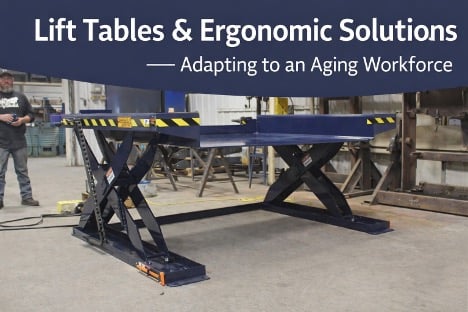
PART 2: Specialty Lift Systems — Engineering the Right Solution for the Application
Introduction: Moving Beyond the Basics
In Part 1, we looked at how ergonomic lift tables and positioning equipment help facilities adapt to an aging workforce, reduce injuries, and improve productivity.
But basic lifting is only part of the equation.
As operations become more specialized, so do the challenges:
- Tight footprints
- Heavy or oversized loads
- Precision positioning requirements
- Continuous product flow
This is where engineered lift solutions come into play.
Choosing the right system isn’t about lifting—it’s about solving the application.
Mechanical Spiral Lifts: Continuous Flow Between Elevations
Mechanical spiral lifts are designed for continuous vertical movement, not stop-and-go lifting.
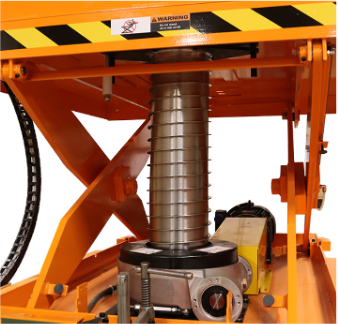
Using a rotating spiral mechanism, they convert motion into smooth, controlled elevation changes.
Best for:
- Production flow lines
- Food processing
- Packaging and automation
Key advantages:
- Continuous movement
- Reduced product shock
- High repeatability
- Ideal for washdown or clean environments
Mast Lifts: Vertical Precision in Tight Spaces
Mast lifts deliver straight vertical travel with a minimal footprint, making them ideal where space is limited.
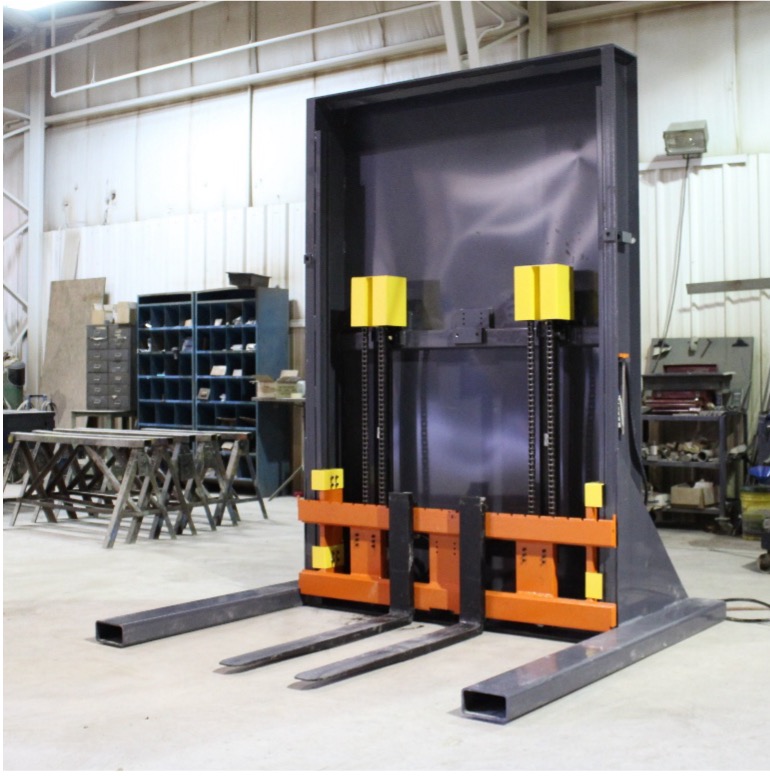
Best for:
- Pallet handling
- Conveyor feeding
- Workstation height adjustment
Key advantages:
- Precise positioning
- Compact design
- Stable load handling
- Forklift alternative in some workflows
Chain-Driven Lifts: Precision You Can Engineer Around
Chain-driven systems offer exact positioning and repeatability, making them ideal for process-driven operations.

Best for:
- Assembly lines
- Automated transfer systems
- Packaging operations
Key advantages:
- No drift
- Consistent speed
- Controlled motion
- Integration with automation
Tandem Lifts: Built for Length and Balance
Tandem lifts solve the problem of long or oversized loads by using synchronized lifting systems.
Best for:
- Long materials (pipe, lumber, metal)
- Multi-pallet handling
- Large assembly processes
Key advantages:
- Even load distribution
- Stable platform across full length
- Reduced structural stress
Double-Wide Lifts: More Platform, More Throughput
Double-wide lifts expand working area and allow multiple loads to be handled simultaneously.
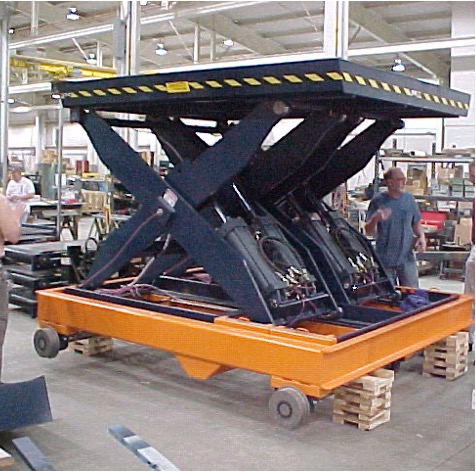
Best for:
- Pallet build stations
- Large assemblies
- Multi-SKU packaging
Key advantages:
- Increased efficiency
- Less repositioning
- Larger ergonomic workspace
Heavy-Duty Lifts: Built for Extreme Demands
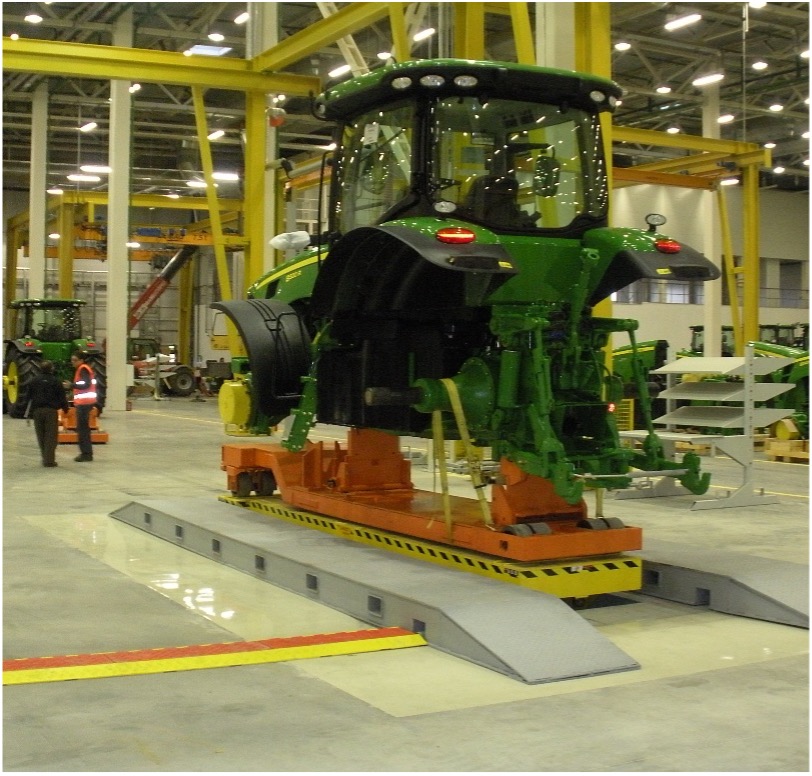
Heavy-duty lifts are engineered for high-capacity, high-cycle environments where standard equipment won’t hold up.
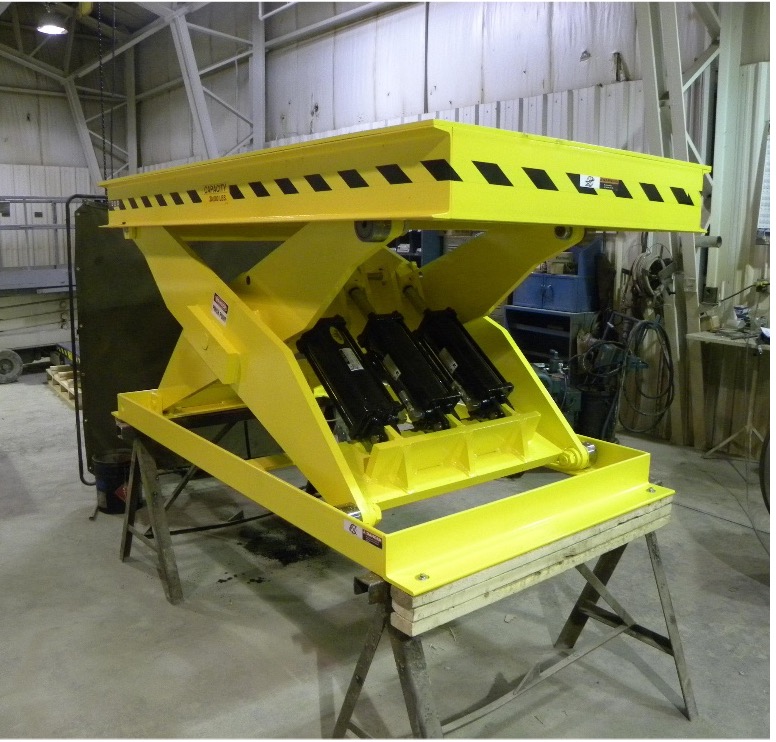
Best for:
- Automotive manufacturing
- Steel and fabrication
- Large-scale assembly
Key advantages:
- Extreme load capacity
- Structural durability
- Custom configurations
- Long-term reliability
Bringing It All Together
Each lift type solves a specific challenge:
- Mast Lifts → Tight space, vertical precision
- Spiral Lifts → Continuous flow
- Chain-Driven Lifts → Exact positioning
- Tandem & Double-Wide → Size and load distribution
- Heavy-Duty Lifts → Extreme capacity
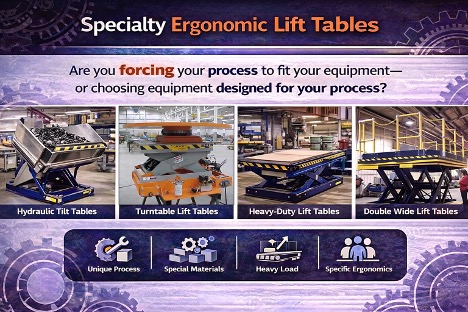
The difference between an average operation and a high-performing one often comes down to this:
Are you forcing your process to fit your equipment—or choosing equipment designed for your process?
Why It Matters
Investing in the right lift solution impacts more than just material movement:
- It reduces injury risk and fatigue
- It improves consistency and throughput
- It supports automation without full replacement
- It extends the life of your workforce
- It reduces long-term operational costs
Most importantly—it turns material handling from a liability into a competitive advantage.