Pallets Big Box Retail requirements

There are lots of “big box” retailers in the marketplace. We all know the big names: Costco, Walmart, Sam’s Club, and Lowe’s – and of course there are many others out there.
People who don’t work in the warehousing or manufacturing space may not realize the sheer magnitude of commerce that is dependent upon the pallet.
The casual observer may wonder just exactly how merchandise gets from one location to the other – what that supply chain includes. They may understand the “20,000 foot view”, namely that goods are transported by truck, rail, or air. But how is that merchandise that is being transported stored or moved in and out of those planes, trains and trucks?
Wooden pallets allow us to transport goods all round the world
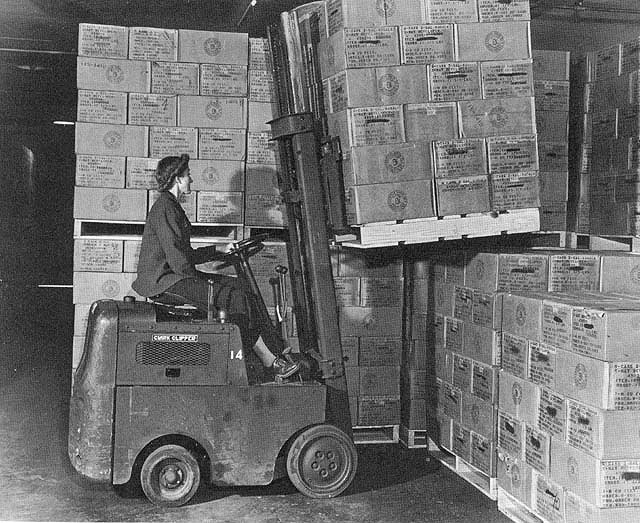
Pallets have been around for a long time. While the earliest may be a U.S. patent on a skid from 1924 describing Howard T. Hallowell’s “Lift Truck Platform,” it was the late 1930s when pallets became much more commonplace with the newer forklifts.
There is of course much more to this story than simply buying a pallet, or even 50 pallets, loading them up and sending them on their way, although that by itself is no small task. There are choices of wood, aluminum and plastic pallets among others, each with their own defining characteristics.
Companies can buy pallets, but what do you do when the merchandise is destined to sit at a location for an extended period of time? Does that mean that the manufacturer must continue to purchase pallets and expect that a number of them will be lost to him/her throughout the supply chain process?
For the manufacturer or warehouse manager, very often there are specific requirements that the receiving company or warehouse has concerning pallets, and that’s where it all becomes a little more complicated.
Pallet Pooling – Share and Re-use
Those and other questions paved the way for pallet renters to enter the marketplace. Perhaps the most well known is CHEP (chep.com/us), which made its way into the United States market in the late 1980s and early 1990s with a business model that promised a higher quality pallet coupled with no need to buy pallets or to chase down the pallets that the manufacturer used in shipping goods to a distant location. T
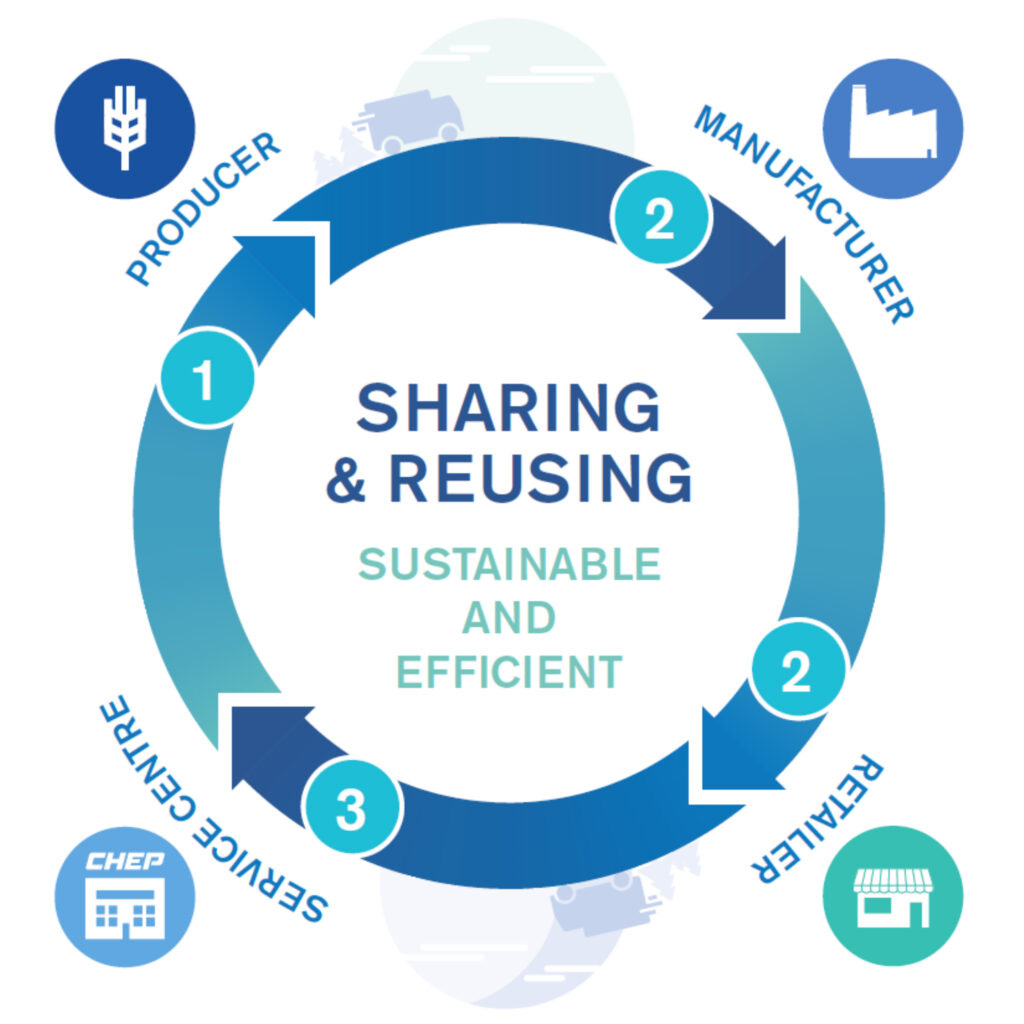
The CHEP website describes it this way: “CHEP’s circular business model is based on the concept of “share and reuse.” We call it pooling. With the CHEP pooling system, you get the pallets, IBCs and industrial containers you need from us on a rental basis. Sharing and reusing products makes them more sustainable; that’s why you can’t buy our pallets or containers.” Under this system, they manage the administrative procedure, the retrieval and quality assurance of the pallets and containers in a closed loop system.
CHEP and its smaller competitor PECO have had success in convincing big box retailers to use their pallets. From the big box point of view, they don’t own the pallets, they receive pallets as needed, and the pallets go back into the retail pool. With the pallet rental company managing the process, the retailer merely pays a rental fee.
This practice has led to a few industry challenges. Some of the large retailers did not want to be overly beholden to CHEP and created their own pallet specification.
iGPS, PECO, or CHEP US Block pallets are required throughout North America.
Costco, for one, will not accept GMA #1/Grade A stringers, CHEP stringers, CHEP Europe, or corrugated/paperboard pallets. Only when iGPS, PECO, and CHEP rental pallets cannot be used may Costco approve alternate pallets created its own block pallet specification.
These rental pallets are recognizable by their “block” appearance, and heavy-duty design. A 48″ x 40″ whitewood block pallet must be equivalent to PECO and CHEP block pallets (in structure and performance, per these specifications).

When to palletize and on what pallet?
Consider the dilemma of the manufacturer or shipper who ships merchandise to a big box that required delivery with a pallet that meets their specification, another who is in the CHEP or PECO system, and others who have no particular requirements. There needs to be a lot of thought in preparing shipping on different pallets as they leave the warehouse.
Those challenges aside, the one bright light for the shipper may be that the process reduces or eliminates the need to “chase” pallets down the supply chain, or continue to purchase additional pallets. There have been exchange programs in the past which worked to some extent. But what happens for the customer who sends material out on a rented pallet when that merchandise sits for six months? What is the ROI with ongoing monthly rental fees for pallets that are essentially taken out of the supply chain?
Conversion from wood pallets to plastic
For a long time, wooden pallets dominated the supply chain. Also noteworthy is that some of the big boxes are beginning to move away from the wooden pallet to plastic to reduce handling issues and cleanup of wood splinters and debris.
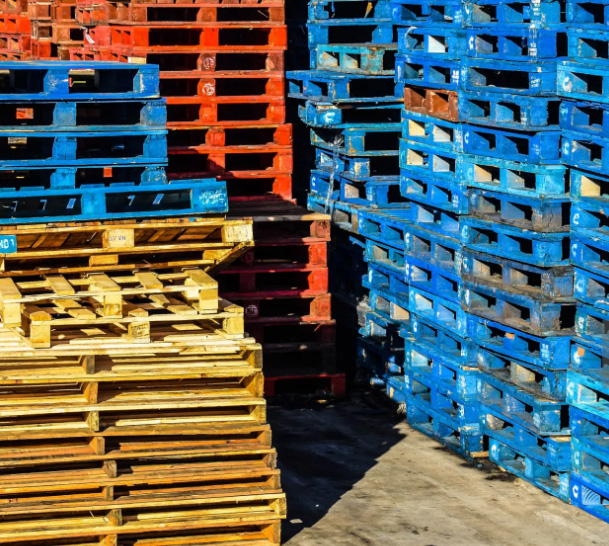
The rental program isn’t perfect. There are reported cases of rental pallets behind grocery stores, for example, that haven’t made it back into the rental pool. One food service will only use CHEP pallets in their building. If vendors do not send on those specific pallets they will pay an upcharge.
You can get a feel for this the next time you walk through a big box store – see whose pallets are storing the merchandise.
With those different requirements in the marketplace, how do you as a manufacturer and shipper best cope with a complicated initial point in the supply chain?
Make the best pallet choice
- The larger consideration is how to make the best choice on preparing your merchandise to be shipped taking into account these differing requests.
- With those different requirements in the marketplace, how do you as a manufacturer and shipper best cope with a complicated initial point in the supply chain?
- If some of your merchandise goes on rental pallet, some on a customer specific pallet, and some to destinations with no specific requirements, the first step is to determine the best pallet solution for your plant. Do you rent? Buy your own? A combination?
If this big box retailer refuses shipments from manufacturers on anything other than their specified pallets (or charges an additional fee for non-Costco pallets), the manufacturer shipping to them has another wrinkle to deal with in the supply chain process.
Learn what the options are with a no-obligation conversation
We can assist with customized solutions that will make pallet preparation at your facility easier, quicker, and safer.
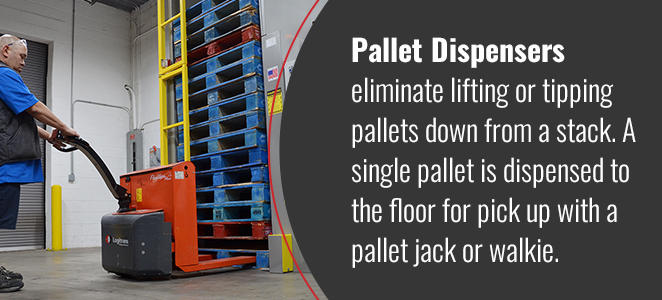
We offer pallet inverters, pallet dispensers and pallet changers, all of which will help your facility run at peak efficiency and get your merchandise ready to go to its intended destinations in compliance with the specifications of the receiving entities.
That’s where we can help. We can assist with customized solutions that will make pallet preparation at your facility easier, quicker, and safer.
And, even better, you’ll improve your workplace safety – avoid sprained backs and injuries from the lifting and moving of heavy loads by human hands.

We’re here to help you!
As you consider any upgrade, we can help you evaluate potential next steps. Please contact Cherry’s Industrial Sales Department at 800-350-0011 or email [email protected]. We’re here to help!