Tariffs, Global Uncertainties and The Case for “Buying American"
Posted: | Author: Cherrys Industrial
Sharing:

We American manufacturers have long encouraged prospective customers to “buy American.” We point to quality of design and workmanship in our final product, our years of experience and expertise, the availability of trained technicians to provide service support if needed, and of course the patriotism of supporting local businesses that employ people, pay taxes, and give back to their communities. While perhaps compelling reasons on their own, certain shifts in economic realities that we currently face may make the argument even more persuasive than before.
Total Cost of Ownership
There is the issue of “total cost of ownership” to be taken into account – which includes factors beyond the purchase price of a piece of equipment.
For decades, global manufacturing operated under the premise that companies should produce goods where labor and materials were cheapest, and in turn rely on efficient shipping networks to move these products worldwide.
Global Uncertainty
But conditions are changing. The politicization of tariffs, as some might characterize it, has upended a number of factors in both manufacturing and purchasing. This “800-pound gorilla in the room,” however, is only part of the changing picture. Other economic uncertainties at work may also be influencing where equipment is built, how these products move globally, and in turn how purchasers ultimately make their buying decisions.
Geopolitical considerations, including the war in Iran, challenges over shipping through the Strait of Hormuz, shifting energy markets and higher fuel costs, rising freight volatility, and supply chain disruptions are all affecting the market. We are also dealing with the devaluation of the American dollar against foreign currencies. These factors together are becoming a conversation-changer. They impact how we as manufacturers conduct business; but for the end user, these factors serve as a strong wake-up call that merely considering the upfront purchase price of a piece of equipment is not enough. Instead, buyers must look at the total cost of ownership – what it takes to get the equipment to them, how long it takes, and what challenges may arise along the way.
Equalization of Prices Globally
Tariffs, coupled with the devaluation of the dollar against foreign currencies, have led to more of an equalization of prices globally. This change puts American manufacturers in a more competitive position strategically. But beyond pricing itself, we see the effects of ongoing supply chain impacts, increased shipping and import fees, and the potential lost productivity due to shipping delays from overseas. With all of that said, the perceived advantages of purchasing a piece of equipment from overseas fades.
Supply Chain Risks
The tariffs imposed on products from overseas, coupled with higher freight costs, and the uncertainty of just how quickly product can be shipped from overseas and arrive here create barriers for purchasing overseas equipment.
When products arrive at port, there are frequent delays for inspections, due to heightened security. With supply chain disruptions and other factors, the time between ordering and delivery from overseas stretches out. What is the cost of waiting for a piece of equipment that a purchaser needs? If it takes seventeen weeks for a machine to arrive, and a company is losing $1000 a week by not having the machine in service, doesn’t it make greater economic sense to purchase from an American manufacturer who can deliver the machine in ten weeks and a superior product at the same time? In that example, assuming pricing is competitive, the company saves $7000 in lost productivity time – and avoids lost opportunities. Anecdotally, we have won several projects from clients who did not want to wait 15 or 17 weeks to have a product shipped from overseas.
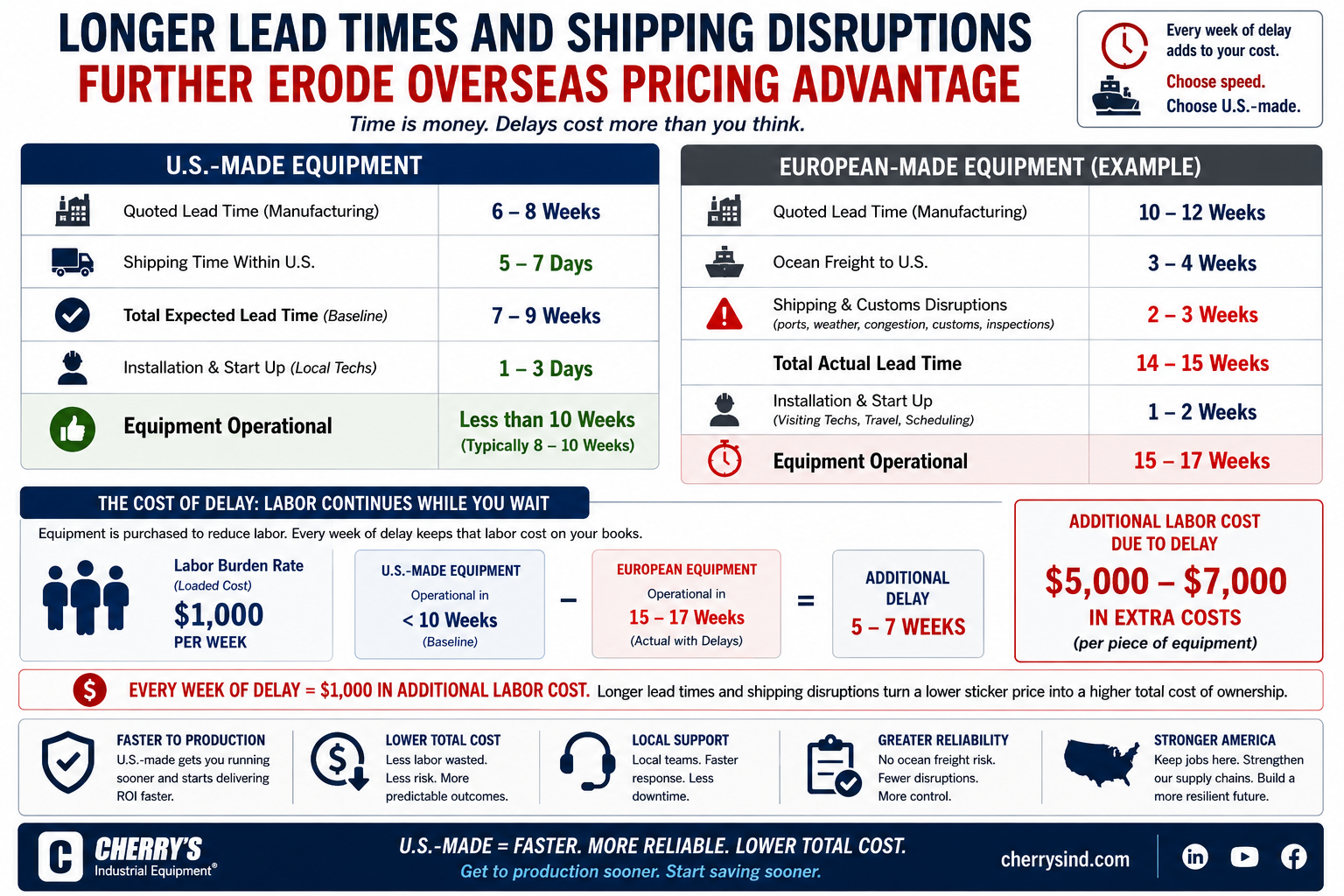
We cannot know for certain where economic conditions will go. Will the war end quickly? Will prices drop? Will the tariffs issue stabilize? Will there be other factors that we can’t foresee? Working in a global market, there will always be uncertainties. And while we might take issue with how and why tariffs were imposed, we cannot deny their impact on the market – as well as the other conditions we have outlined.
Buy Cherry's American Made Products
We are proud of the superior products we design and build. We know many others in the manufacturing industry who do excellent work also. While that alone ought to be reason enough to buy locally, these uncertain market conditions are providing some extra rationale for the “Buy American” argument.
Our pallet inverters, pallet dispensers, box dumpers, 90-degree tippers and upenders, load and pallet straighteners, pallet changers, roller skids, and automated material handling equipment are proudly designed and manufactured in Illinois. More than 90% of our components are sourced domestically, including American-made steel, hydraulic cylinders, pumps, motors, electrical panels, hoses, fittings, and paint.
By prioritizing domestic suppliers, we help ensure consistent quality, shorter lead times, reliable service support, and greater supply chain stability for our customers.
If you have questions about needs for your warehouse or facility, we are here to answer them. For a no-obligation discussion, please give us a call or visit our website at https://cherrysind.com.
Talk to an Application Specialist