Pressed Wood Pallets Buyers Guide
Posted: | Author: Cherrys Industrial
Sharing:
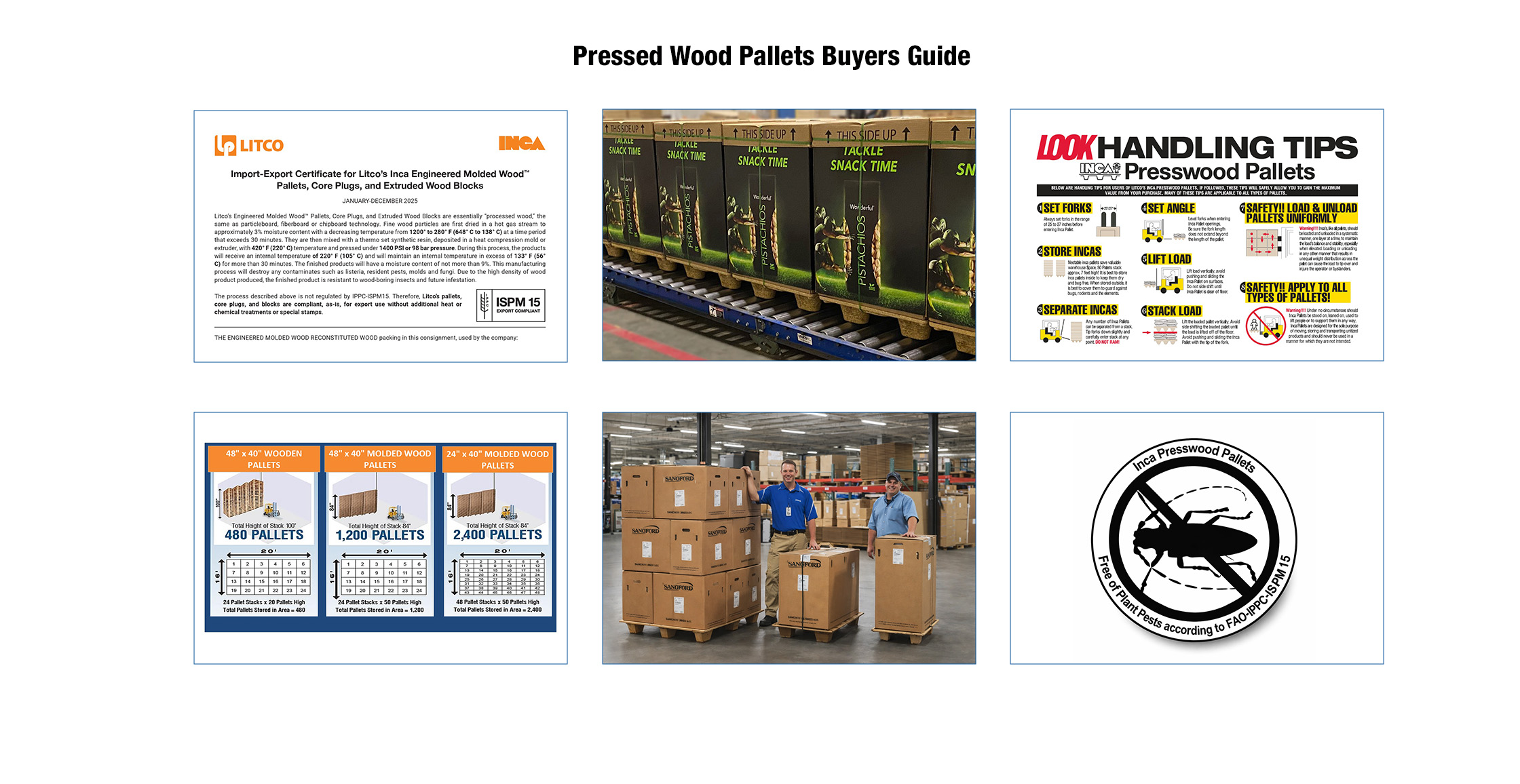
Presswood Pallet Buyer’s Guide Comparison Chart
|
Pallet Size |
Capacity Category |
Dynamic Load Capacity |
Export Compliant (IPPC-ISPM15) |
Common Applications |
|
|
48 x 45 in |
Medium, Heavy, Extra Heavy, Mega Heavy |
1,500 – 3,000 lbs. |
Yes |
Industrial equipment, heavy manufacturing |
|
|
48 x 42 in |
Light, Medium, Heavy, Extra Heavy, Mega Heavy |
1,000 – 3,000 lbs. |
Yes |
Automotive, bulk materials |
|
|
48 x 40 in |
Light, Medium, Heavy, Extra Heavy, Mega Heavy |
1,000 – 3,000 lbs. |
Yes |
Standard North American shipping, warehouse distribution |
|
|
45 x 45 in |
Medium, Heavy, Extra Heavy, Mega Heavy |
1,500 – 3,000 lbs. |
Yes |
Drums, chemical containers |
|
|
44 x 44 in |
Light, Medium, Heavy, Extra Heavy, Mega Heavy |
1,000 – 3,000 lbs. |
Yes |
Food processing, bulk ingredients |
|
|
42 x 42 in |
Light, Medium, Heavy, Extra Heavy, Mega Heavy |
1,000 – 3,000 lbs. |
Yes |
Beverage industry, export freight |
|
|
24 x 40 in |
Heavy, Extra heavy |
2,000 – 2,500 lbs. |
Yes |
Smaller product shipments, parcel freight |
|
|
20 x 24 in |
Extra Heavy |
2,500 lbs. |
Yes |
Display pallets, retail shipping |
|
|
1200 x 800 mm |
Extra Heavy |
2,500 lbs. |
Yes |
|
|
|
600 x 800 mm |
Extra Heavy |
2,500 lbs. |
Yes |
Half-Euro shipments, retail display |
Material & Manufacturing
Presswood pallets are manufactured from a mixture of wood chips, sawdust, and other wood fibers combined with synthetic resin and compression molded under high heat and pressure. This process eliminates insects and pests, making the pallets naturally compliant with IPPC-ISPM15 export regulations without requiring kiln drying or fumigation.
Why Presswood Pallets Are a Strong Alternative to Traditional Wood Pallets
|
Feature |
Presswood Pallets |
Kiln-Dried / Fumigated Wood Pallets |
|
Export Compliance |
ISPM-15 compliant by manufacturing process |
Requires heat treatment or fumigation |
|
Pest Risk |
Eliminated during high-temperature molding |
Potential risk if untreated |
|
Storage Efficiency |
Nestable design saves warehouse space and shipping costs |
Non-nestable |
|
Weight |
Lightweight |
Heavier |
|
Consistency |
Uniform molded construction |
Variation in boards and nails |
Key Benefits for Export Buyers
- Export compliant without heat treatment or fumigation
- Reduced freight costs due to nestable pallet storage
- Made from recycled wood fibers
- Consistent dimensions and quality
- Ideal for one-way international shipping
Expert Tips When Selecting Export Grade Pressed wood Pallets
1. Most Presswood pallets are nestable, which significantly reduces warehouse storage space. However, the nestable design Is not rackable which makes them ideal for export shipments, but less suitable for long-term warehouse storage in racking systems.
- Nestable pallets typically cannot be used in pallet racking systems
- They are primarily designed for floor storage, container loading, or one-way shipping
2. Presswood pallets commonly use a nine-leg molded design which may indent boxes. When loads are double stacked, the pallet legs may:
- Create pressure points
- Indent cartons or packaging below
- Require slip sheets, corrugated pads, or load distribution boards
This is especially important for lighter corrugated packaging or consumer goods shipments.
3. Export Compliance Requirements. For international shipping, pallets must comply with ISPM 15 international phytosanitary regulations. Because of these risks, many exporters transfer product onto ISPM-15 compliant pallets at the time of shipment to ensure compliance.
Key considerations:
- Export Presswood pallets must be properly stamped indicating ISPM-15 exemption
- Shipments using non-compliant packaging materials may be:
- Refused entry
- Destroyed
- Treated or fumigated at the port of arrival
- Subject to delays and additional fees
4. The synthetic resin used in pressed wood pallets is a USDA Certified BioBased Product, formulated with a high percentage of renewable, plant-based materials and independently certified for sustainability by the Cradle to Cradle® Products Innovation Institute.
5. If shipping volume is high, consider purchasing pallets in bulk to reduce freight costs. Investing in load transfer equipment can also improve efficiency by allowing products to be automatically transferred onto export-rated pallets, eliminating the need for manual stacking or restacking at the time of shipment.
6. Consider stackable plastic export-grade pallets if the shipment is time-sensitive and delays at the border could cause significant disruption. They are especially useful for just-in-time shipments, high-value components, or situations where the pallet must remain durable beyond the initial shipping journey.