Freezer Spacer Buyers Guide
Posted: | Author: Cherrys Industrial
Sharing:
Buyer Guide
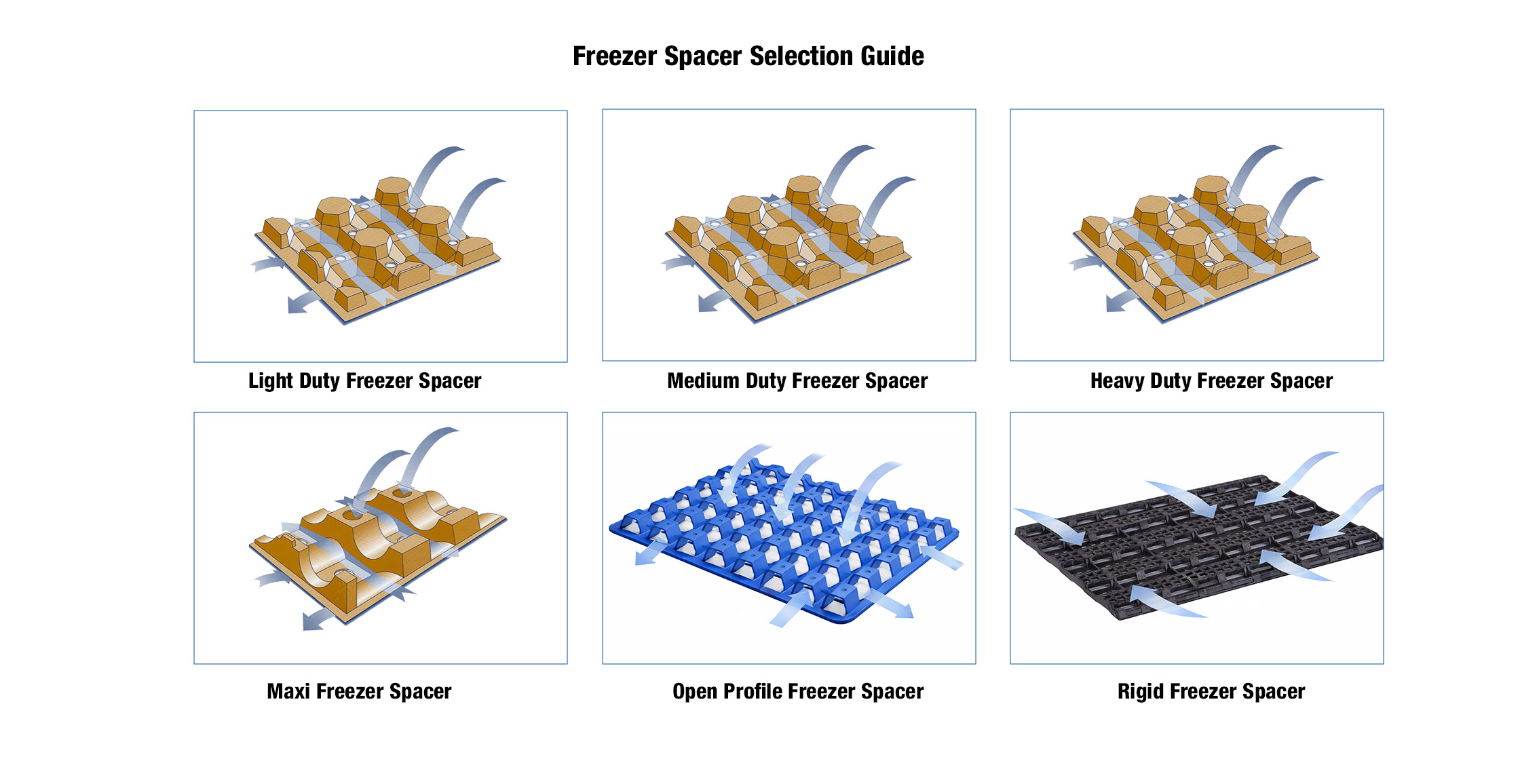
Freezer Spacer Selection Guide
Compare freezer spacer designs side by side: materials, thickness, load capacity, airflow patterns, and practical pros/cons so you can choose the right spacer for your freezer, cooling, or QFR workflow.
Freezer Spacer Comparison
A quick side-by-side view of design tradeoffs: airflow, strength, handling, and construction method.
| Design | Material | Mil Thickness | Load Capacity | Weight / Height | Construction Method | Airflow Pattern | Key Features & Differentiators |
|---|---|---|---|---|---|---|---|
| LW Egg Crate | Polyethylene | 0.050 | 1,600 lbs | 4.0 lbs / 1.25" | Thermoformed | 5-way airflow | Lowest-cost option. Made in USA. Integrated product tabs to hold boxes in place. Manufactured from regrind material. |
| MD Egg Crate | Polyethylene | 0.060 | 1,800 lbs | 4.5 lbs / 1.25" | Thermoformed | 5-way airflow | Made in USA. Product retention tabs. Available in virgin or regrind material. Balanced strength and weight. |
| HD Egg Crate | Polyethylene | 0.065 | 3,600 lbs | 5.0 lbs / 1.25" | Thermoformed | 5-way airflow | Made in USA. High-capacity design with product tabs. Available in virgin or regrind material. Optional ID stripe. |
| Maxi-Flo | Polyethylene | 0.100 | 3,600 lbs | 7.5 lbs / 2.25" | Thermoformed | 5-way airflow | Designed for high-velocity airflow. Made in USA. Product tabs for load stability. Available in virgin or regrind material. Optional ID stripe. |
| Open Profile | Polyethylene | N/A | 3,600 lbs | 8.0 lbs / 2.0" | Injection Molded | 4-way airflow | High-velocity airflow. Imported. Integrated spikes secure boxes in place. Manufactured from regrind material. |
| Lattice HD | HDPE | N/A | 3,600 lbs | 15.5 lbs / 1.5" | Structural Foam Molded | 2-way airflow | Made in USA. Extremely rigid design that does not conform to product profile. Available in virgin or regrind material. |
Pros
- LW Egg Crate: Lowest cost option, better construction than typical imported alternatives, lightweight and easy to handle
- MD Egg Crate: Millions in use with proven longevity, nests for efficient short-term stacking, consistent availability
- HD Egg Crate: Original egg crate design with long field history, higher capacity than MD version, widely available
- Maxi-Flo: Increased airflow, performs well in QFR systems
- Open Profile: High airflow for tempering and cooling, can work with QFR systems
- Lattice HD: Extremely rigid, long service life (15+ years), performs well with hot-filled products requiring cooling
Watchouts / Cons
- LW Egg Crate: Shorter service life, lower load capacity
- MD Egg Crate: Reduced airflow vs. open-profile designs, not ideal for QFR systems
- HD Egg Crate: Reduced airflow for QFR applications
- Maxi-Flo: Will not nest with standard egg crate spacers, longer lead times
- Open Profile: Brittle in cold temperatures, difficult to stack, store, and handle
- Lattice HD: Higher upfront cost, slower freezing times due to reduced airflow
Best Use by Freezer Spacer Type
Quick recommendations based on what matters most: budget, airflow, durability, or asset life.
LW Egg CrateModel: PEFS-LD
Budget-sensitive applications, lighter loads and short-term freezer storage.
MD Egg CrateModel: PEFS-MD
Standard cold storage, general freezer spacing where nesting and availability matter.
HD Egg CrateModel: PEFS-HD
Heavier loads in traditional freezer environments, operations prioritizing durability over maximum airflow.
Maxi-FloModel: PEFS-MAXI
High-velocity airflow and rapid freezing applications, QFR and performance-driven freezer systems.
Open Profile
Tempering processes, short-term cooling where airflow is prioritized over durability.
Expert Tips When Selecting Freezer Spacers
Consider Country of Origin & True Landed Cost
Look beyond unit price. Country of origin affects tariffs, duties, lead times, and landed freight. Imported spacers can look cheaper up front but cost more once shipping and tariffs are included.
Ask About Regrind Material Composition
Not all regrind plastics are equal. Confirm whether regrind is post-consumer plastic or manufacturing regrind from the original production process. Manufacturing regrind is typically more consistent.
Understand the Ideal Virgin-to-Regrind Blend
A 70/30 blend (70% virgin resin, 30% manufacturing regrind) is often a strong balance: it maintains structural integrity while managing cost and sustainability targets.
Verify USDA Material Requirements
If product will have direct contact with the freezer spacer, the spacer must be manufactured from USDA-approved virgin material. Regrind materials are not acceptable for direct food-contact applications.
Plan for Asset Control with Identification Features
When spacers move between plants or third-party cold storage facilities, molded-in identification stripes can help identify ownership, improve return rates, and reduce loss over time.
Evaluate Total Cost of Ownership, Not Just Purchase Price
Factor in breakage/replacement, potential energy impacts from airflow efficiency, labor (handling, removal, reuse), turns per year, expected service life, and cleanability between uses. Higher durability and better handling often reduce cost per use, even if upfront price is higher.