Benefits of Collapsible Storage Containers
Posted: | Author: Cherrys Industrial
Sharing:
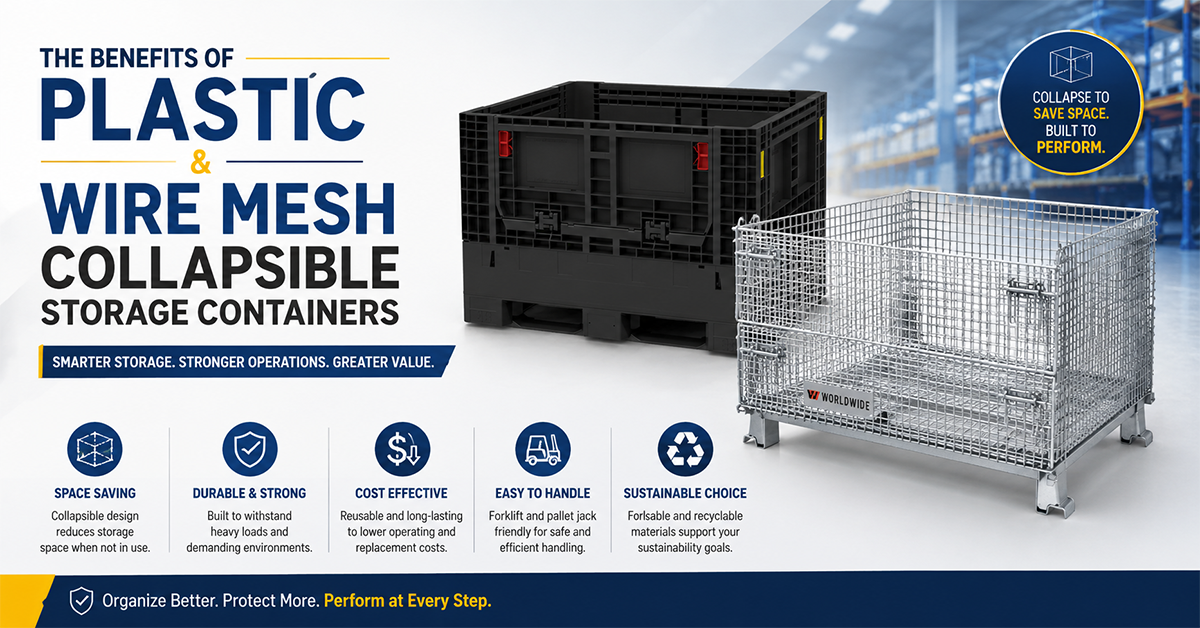
The Complete Guide to Collapsible Storage Containers for Warehouses and Industrial Facilities
Plastic collapsible storage containers are among the most practical and cost-effective solutions for modern warehouses, manufacturing facilities, and distribution centers. Businesses that manage inventory at scale understand that storage space is one of their most valuable assets — and often one of their highest operating expenses.
Maximizing storage efficiency directly impacts profitability. That’s why warehouse managers and supply chain professionals are increasingly investing in collapsible storage containers to improve organization, reduce wasted space, and streamline material handling operations.
Whether you operate a large industrial warehouse, a mid-sized manufacturing plant, or a retail distribution center, collapsible containers offer significant advantages for storing and transporting products safely and efficiently.
Why Storage Efficiency Matters
Efficient operations rely on organized inventory systems. Materials must be easy to store, access, move, and track throughout the supply chain. Poor storage systems lead to wasted time, damaged inventory, inefficient labor, and higher overhead costs.
An effective storage solution should:
-
Protect products during storage and transport
-
Improve inventory organization
-
Reduce wasted warehouse space
-
Allow quick access and retrieval
-
Support safe material handling
-
Adapt to changing storage demands
Collapsible storage containers help businesses achieve all of these goals while providing one additional advantage traditional storage systems cannot: they fold flat when not in use.
That simple feature dramatically reduces the amount of unused warehouse space occupied by empty containers.
The Advantages of Collapsible Storage Containers
Collapsible storage containers offer long-term operational and financial benefits across virtually every industry.
1. Space Savings
One of the biggest advantages is the ability to collapse and store containers flat when empty. Traditional rigid containers consume the same amount of space whether full or empty. Collapsible designs eliminate this inefficiency.
Businesses can:
-
Free up valuable warehouse floor space
-
Reduce clutter
-
Improve workflow and accessibility
-
Increase overall storage capacity
For high-volume facilities, the space savings alone can justify the investment.
2. Improved Supply Chain Efficiency
Warehouses and distribution centers operate around a critical pivot point: inventory movement.
Efficient supply chains depend on smooth transitions between:
-
Bulk storage
-
SKU organization
-
Order picking
-
Shipping
-
Receiving
Using the same collapsible container for both storage and transport minimizes unnecessary handling, repacking, and movement. This reduces labor costs while lowering the risk of product damage.
3. Durability and Long-Term ROI
Although collapsible containers may have a higher upfront cost than cardboard or wood alternatives, they deliver exceptional long-term value.
High-quality industrial containers provide:
-
Long service life
-
Repeated reuse
-
Reduced replacement costs
-
Better product protection
-
Lower waste generation
The result is a significantly stronger return on investment over time.
Plastic vs. Wire Mesh Collapsible Containers
Both plastic and wire mesh collapsible containers provide outstanding storage performance, but each offers unique advantages depending on the application.
Collapsible Plastic Container Benefits
Plastic collapsible containers are widely used in industries such as:
-
Automotive manufacturing
-
Food and beverage
-
Retail distribution
-
Appliances
-
Grocery operations
-
Pharmaceuticals
They are especially useful in environments where cleanliness and weather resistance matter.
Key Benefits of Plastic Containers
Most industrial plastic containers are manufactured using high-density polyethylene (HDPE), a material known for strength, durability, and chemical resistance.
Benefits include:
-
Lightweight yet strong construction
-
Excellent load capacity
-
Weather and contaminant resistance
-
Easy cleaning and sanitation
-
Safe handling with smooth surfaces
-
Non-toxic, contamination-free storage
-
Recyclable and environmentally friendly materials
-
Long operational lifespan
Unlike wood, plastic does not rot. Unlike cardboard, it does not weaken when exposed to moisture.
Common Plastic Container Applications
Plastic collapsible containers are commonly used for storing:
-
Hardware
-
Automotive parts
-
Rubber products
-
Paints and resins
-
Food products
-
Fragile materials like glass and ceramics
-
Retail merchandise
Their versatility makes them ideal for both industrial and commercial environments.
Available Plastic Container Sizes
Collapsible plastic containers are available in multiple sizes and load capacities to suit different operational needs.
Light-Duty Containers
Ideal for:
-
Small parts
-
Electronics
-
Components
-
Assembly operations
These compact bins stack and fold easily for convenient storage.
Medium-Duty Containers
Designed for:
-
Tools
-
Hardware
-
Heavier materials
Standard dimensions often include 32” x 30” footprints with varying height options.
Heavy-Duty Containers
Heavy-duty plastic containers are commonly used in automotive and appliance manufacturing facilities.
Features include:
-
Forklift compatibility
-
Large pallet-style footprints
-
Stackable designs
-
Load capacities up to 2,000 pounds
-
Heights ranging from 18” to 34”
These containers maximize warehouse density while supporting heavy industrial use.
Collapsible Wire Mesh Container Benefits
Wire mesh collapsible containers provide many of the same space-saving advantages as plastic containers while offering additional strength and visibility benefits.
They are commonly constructed using galvanized steel wire mesh for long-lasting durability.
1. Better Visibility
Wire mesh construction allows employees to quickly identify contents without opening containers.
Benefits include:
-
Faster order picking
-
Improved inventory accuracy
-
Reduced search time
-
Better warehouse organization
2. Easier Access
Many wire mesh containers feature:
-
Drop-down access doors
-
Side gates
-
Easy-access panels
These features simplify loading and unloading while improving workplace safety.
3. Superior Vertical Storage
Wire mesh containers are designed for heavy stacking applications.
Advantages include:
-
High load capacities
-
Better use of vertical warehouse space
-
Strong structural stability
-
Reduced storage footprint
Some models support loads up to 4,000 pounds.
4. Collapsible Design
Like plastic models, wire mesh containers fold flat when empty.
This allows businesses to:
-
Store unused containers efficiently
-
Reduce warehouse congestion
-
Improve operational flexibility
Additional Benefits of Wire Mesh Containers
Warehouse managers also value wire mesh systems because they are:
-
Highly durable
-
Cost-effective
-
Long-lasting
-
Easy to clean
-
Well-ventilated
-
Customizable
-
Available in many sizes and configurations
Optional features may include:
-
Casters
-
Dividers
-
Identification plates
-
Stackable feet
-
Running bars
-
Security latches
Custom Storage Container Solutions
Not every warehouse operates with standard dimensions or conventional storage requirements.
Custom collapsible containers allow businesses to optimize storage systems for:
-
Unique product sizes
-
Specialized workflows
-
Limited storage footprints
-
High-volume operations
-
Industry-specific requirements
Custom designs typically consider:
Dimensions
Containers can be built to match available warehouse space and specific product dimensions.
Load Capacity
Proper engineering ensures containers safely handle expected weight requirements without compromising safety.
Functionality
Storage systems must support real operational workflows — not create new inefficiencies.
Choosing the Right Collapsible Storage Container
Selecting the right collapsible storage solution depends on several factors:
-
Product type
-
Weight requirements
-
Warehouse layout
-
Frequency of transport
-
Environmental conditions
-
Inventory turnover rate
Plastic containers may be ideal for cleanliness-sensitive environments, while wire mesh systems excel in heavy-duty industrial applications.
In many operations, a combination of both provides the best results.
Final Thoughts
Collapsible storage containers are more than simple warehouse accessories — they are strategic tools for improving efficiency, organization, and profitability.
By reducing wasted space, improving inventory handling, and supporting safer operations, collapsible containers help businesses optimize every square foot of warehouse capacity.
Whether choosing plastic or wire mesh designs, companies that invest in high-quality collapsible storage systems position themselves for long-term operational success.