Why Aluminum Meat Pallets Are Replacing Plastic in High-Demand Facilities
Posted: | Author: Cherrys Industrial
Sharing:
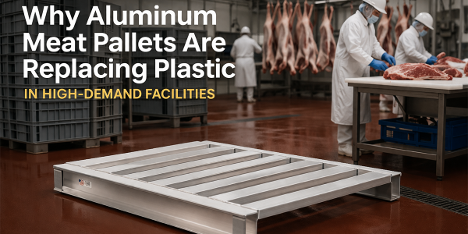
Why Aluminum Meat Pallets Are Replacing Plastic in High-Demand Facilities
In high-volume meat processing environments, pallets take a beating—heavy loads, constant movement, cold storage, and strict sanitation requirements all push traditional materials to their limits. For years, many facilities relied on in-house plastic pallets, but as operational demands increased, those solutions began to fall short.
Enter the next evolution: engineered aluminum meat pallets—purpose-built to outperform.

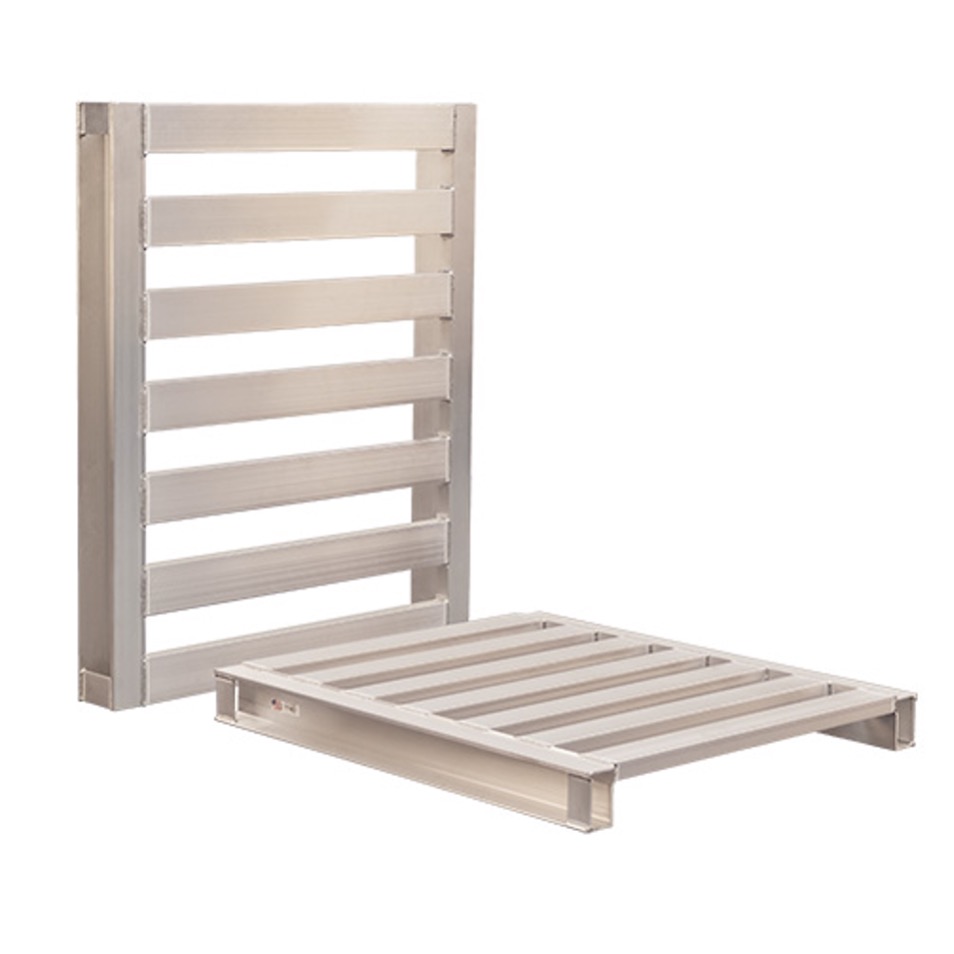
One of the standout features of modern aluminum pallets is their edge rackable capacity of up to 4,000 lbs, delivering the strength needed for heavy-duty applications. Despite this, they maintain a low tare weight of under 50 lbs, making them significantly easier to handle than steel alternatives and more durable than plastic.
This balance of strength and weight is made possible by 6005/T5 tempered aluminum extrusions, a material choice that provides excellent structural integrity while resisting deformation over time.
Designed for Real-World Abuse
This isn’t a theoretical design—it’s a pallet that has evolved through real-world use. Now in version 4, each iteration has been shaped by direct user feedback from manufacturing environments.
|
Key upgrades include:
These enhancements directly address the wear-and-tear issues that caused plastic pallets to fail prematurely.
|
|
Built for Sanitation and Cold Environments
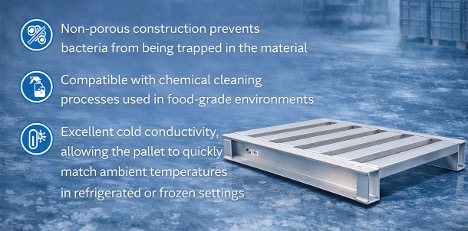
It’s worth noting that aluminum will naturally oxidize over time if left untreated, but this does not compromise structural integrity and can be managed with proper finishing or maintenance practices.
Optimized for Efficiency and Safety
Beyond strength, the design focuses on operational efficiency:
- Low pallet height (5") improves storage density and handling ergonomics
- Available in solid top or spaced board configurations to match application needs
- Fire-resistant construction, offering a critical safety advantage over plastic
These features make the pallet not just stronger—but smarter for modern facilities.
|
Why Plastic Pallets Are Being Phased Out Plastic pallets often struggle in environments with:
|
|
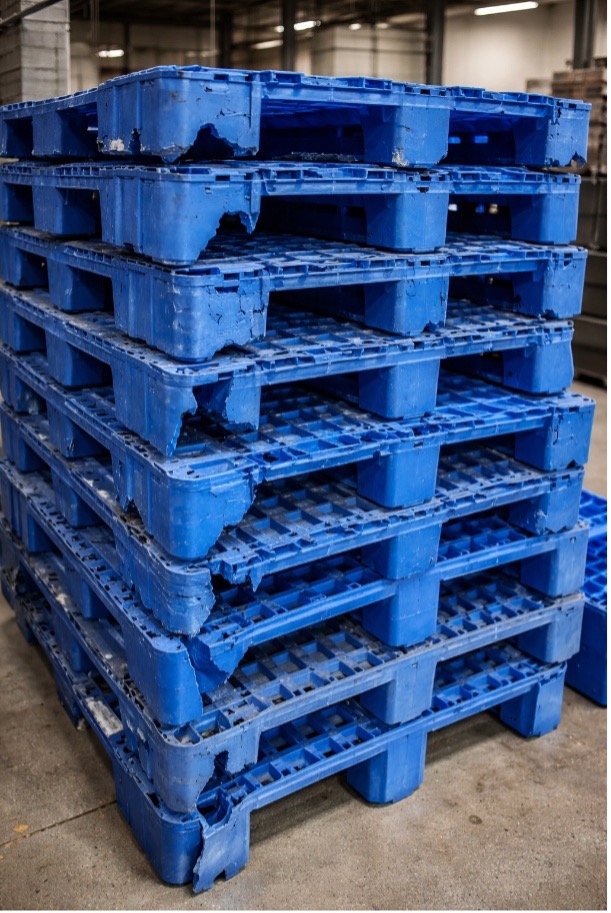
Aluminum, on the other hand, provides:
- Longer lifespan
- Higher load reliability
- Lower total cost of ownership over time
- Metal detectability, adding an extra layer of protection in food processing environments
A Purpose-Built Replacement
This aluminum meat pallet wasn’t designed in isolation—it was developed specifically to replace failing in-house plastic pallets across multiple manufacturing facilities.
The result is a solution that:
- Withstands heavy racking demands
- Reduces damage-related downtime
- Extends service life significantly
The Bottom Line – Built to Last, Designed to deliver value
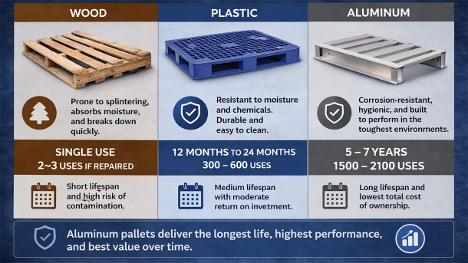
As processing facilities scale and demands intensify, pallet performance becomes a critical factor in operational efficiency. Aluminum pallets—especially those refined through multiple design iterations—are proving to be a superior alternative.
They’re not just a replacement.
They’re an upgrade built for the realities of modern manufacturing.