Hiring hurdles: challenges in the manufacturing industry (Part 1)
The data about unemployment
When it comes to employment in the United States, there is a mix of good and challenging news, and the manufacturing industry is affected by both.
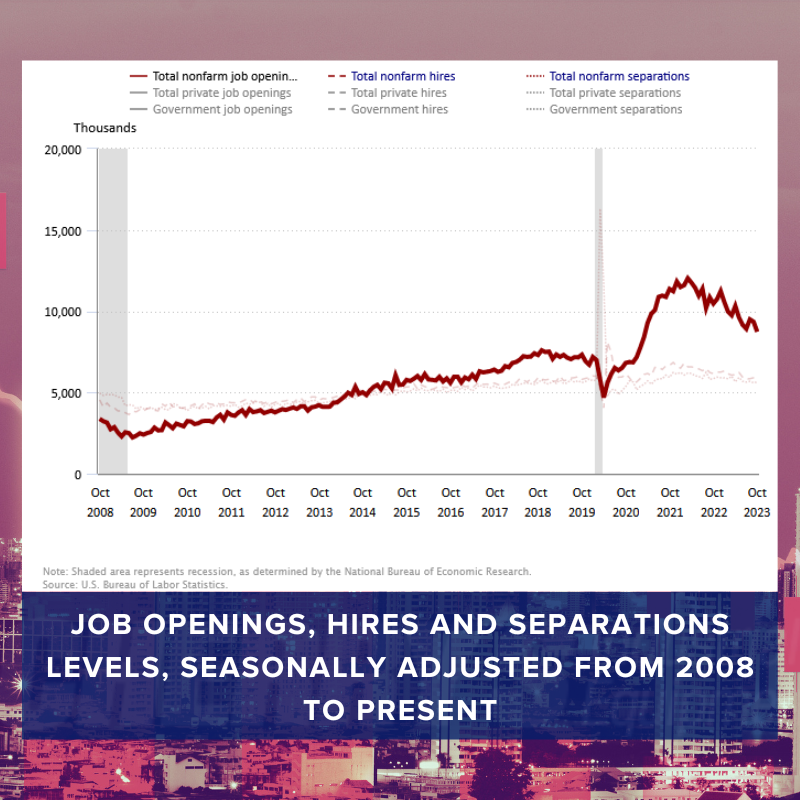
Covid-19 has had a monumental impact on the labor force. At the height of the pandemic, more than 120,000 businesses temporarily closed, and more than 30 million U.S. workers were unemployed. Since January 2020, though, job openings have steadily increased, while unemployment has slowly declined.
The Bureau of Labor Statistics report for November 2023 showed 9.6 million job openings in the United States, with only 6.4 million workers unemployed. Despite the addition of millions of jobs to the economy over the last several years (4.5 million alone in 2022), the number of available jobs seemingly continues to outpace the number of people actively seeking work.
There are 1.5 million fewer Americans participating in the labor force today compared to February 2020
First, what is contributing to this labor shortage?
In general, across many industries, there appear to be several factors:
- Early retirements: As of October 2021, the pandemic had driven more than 3 million adults into early retirement. The number of adults 55 and older detached from the labor force due to retirement grew from 48.1% to 50.3% in the third quarter of 2021.
- According to the U.S. Census Bureau, net international migration to the U.S. showed only a 247,000 population increase between 2020 and 2021. Compared to the prior decade’s high of a 1,049,000 increase between 2015 and 2016 due to immigration, the immigration impact dropped by 76%.
- “The Great Reshuffle” among workers: “The Great Resignation” became part of our vocabulary, with people quitting their jobs in search of more free time or better opportunities. In August 2023, 3.5 million people quit their jobs, although the hiring rate has outpaced the quit rate since November 2020.
Employment in the United States: How the manufacturing industry fares in the labor shortage
Looking specifically at the manufacturing industry, we are far from immune to these workforce challenges.

A 2022 study by The Manufacturing Institute and Delolitte predicts that the manufacturing skills gap in the U.S. could result in 2.1 million unfilled jobs by 2030.
The study’s findings are based on online surveys of more than 800 U.S.-based manufacturing leaders and interviews with industry executives. The lack of skilled labor was the industry’s major challenge even before the pandemic and remains so today.
The study shows that 1.4 million manufacturing jobs were lost in the early days of the pandemic, which set the labor force back by more than a decade. The study notes that the industry has recovered these lost jobs and is now in urgent need of more workers.
Several other conclusions from this study are that finding the right talent is now 36% more challenging than in 2018, and 77% of those surveyed anticipate ongoing difficulties in attracting and retaining workers.
There are about a half million open or unfilled jobs in the manufacturing industry
With this estimated shortage of 500,000 qualified workers, manufacturers face a dilemma when it comes to expansion or even sometimes trying to maintain the status quo.
In addition to the previously mentioned reasons for a labor shortage, an additional factor somewhat specific to our industry may further contribute to the shortage – namely, the advancement of technology in the manufacturing industry. Ironically, it is also one of our greatest advances.
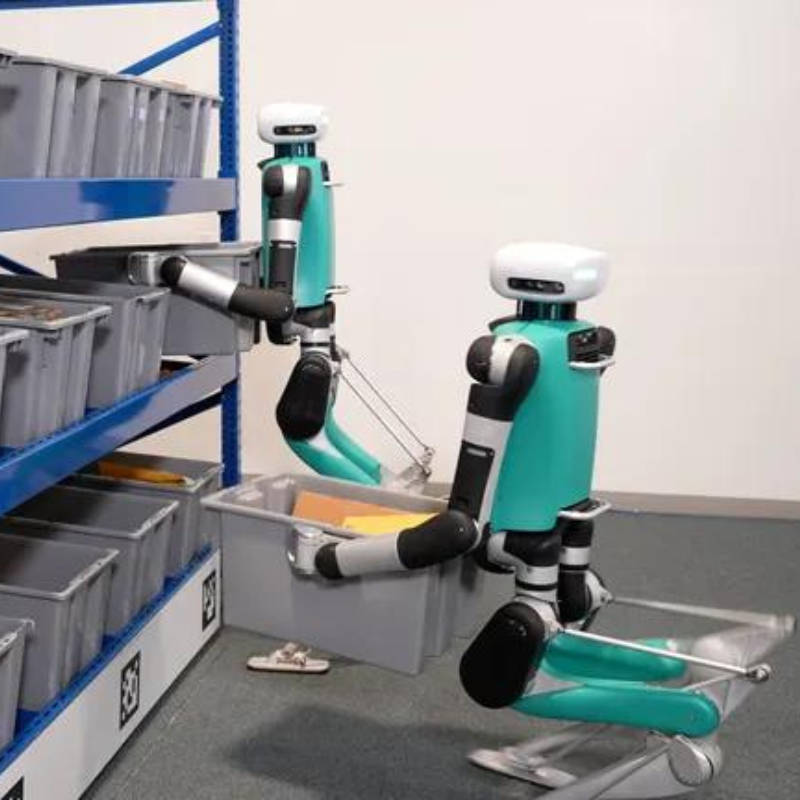
Amazon announced it had begun testing a bipedal robot (named Digit) in its BFI1 Amazon Fulfillment Center in Sumner, WA.
Not everyone, however, openly embraces the changes. Many workers lack the training and education to keep up with the new technology, which includes – but is not limited to – robotics on the plant floor.
There is also a component of the workforce that is “old school” and slow to embrace robotics, automation, and new technology. There is a fair amount of “we’ve always done it this way” thinking.
It’s a challenge in need of a solution
With predictions of 2.1 million unfilled jobs in less than a decade, it is incumbent upon us to find ways to address this shortage. And the two paths to achieving this include embracing automation and being strategic in the recruiting and retaining arenas.
In our follow-up blog (Part 2), we’ll outline some potential solutions to these ongoing problems. Sign up to our social media channels to be alerted of new blogs!
Cherry’s Industrial Equipment strives to positively impact the lives of everyday people, by engineered pallet handling solutions to improve safety and efficiency and to help achieve your goals, browse our selection of pallet inversion systems online to see what we offer, or reach out to discuss a custom solution. To request a quote or get more information, feel free to call us at 1-847-696-8889 or submit our online contact form. We’ll answer any questions you may have and suggest the best solutions for your facility.