Adoption of Automation and Technology in the Manufacturing World: How will it change the way we do business and in how (and who) we hire?

Our recent Open House celebration of our company’s 40th anniversary included several panel discussions, one of which addressed the topic of automation and technology in the manufacturing industry. What follows is a recap of our discussion – a look at where automation and technology is today and where it may be headed.
The manufacturing industry has been significantly impacted by the scarcity of labor, causing many to wonder how best to navigate through this reality. One way of coping with this challenge is through adopting newer technologies and embracing robotics.
Human vs Machine
Each individual company may have somewhat different motivations in evaluating technological upgrades. Some in our industry are technology resistant, holding firmly to the belief that automation cannot and should not take the place of skilled human talent. Others embrace automation as a pragmatic alternative to the challenge of getting bodies into the warehouses and plants to meet those production deadlines. For this group, automation may be seen as an interim solution to the labor shortage. Still others, though, view automation as a total game-changer for the industry.

Automation and technology advances will play an increasingly important role in the work environment for 2024 and beyond. Companies seeking to make these upgrades should begin with a discovery phase – evaluating the individual plant’s strengths and weaknesses in the manufacturing process. They might ask, “What is the single biggest problem that the company faces? Is there currently a piece of equipment to help solve it? If not, how does it get designed and developed?”
Those are often questions that we here at Cherry’s face in working with customers – how to help create solutions that work for each individual company.
Automation Strategies
Automation strategies, which are driven by workforce requirements, will look different for each facility. Sometimes the answer for a manufacturer or processor will be to add conveyors or auxiliary equipment. Or it might be adding sensors to equipment so that the machines can report data to the company’s management. Companies seek solutions for all sorts of challenges within their organization, possibly for safety issues or a solution to an ergonomic challenge, and then of course the matter of personnel. Will a piece of state-of-the-art equipment eliminate the need for an employee, or does an employee still need to be present? The discovery phase and ultimate conclusions are not as simple as “we need robotics.” Frequently the upgrading process is incremental in nature, adhering to the adage that we walk before we run.
It’s important to remember that this equipment and the new enhancements will live in the work environment for a long time. And, for companies making the jump into greater automation, it may not mean – at least initially -that fewer people will be needed. What this upgrade may instead mean at the beginning is that a company will need different kinds of people, because this upgrade will shift the knowledge base.

Making the Workplace Safer
Our discussions with companies seeking automation upgrades reveal that their top priority is safety, even over productivity. Concerns range from processes that they see as potentially dangerous or physically taxing, and can also include other factors within a facility such as a high noise level from machines.
As companies contemplate adopting advanced technologies, here are some considerations that should be taken into account.
- Automation needs to be aligned with technology, and that often means “up skilling” a workforce. A company may need an automation engineer, and project manager with sufficient experience. Companies should have a plan for how to accomplish this objective, which may include training, new hires, or some combination.
- Sometimes companies may not be absolutely certain of what they need. They may know that in general they want to automate but are trying to figure out the right path. It may be “we want our machine to go faster,” or “we want a way to have our machine report data to our network.”
- It’s important to get the scope of the project clearly defined, making certain that everyone is on the same page. People may believe they need or want upgraded technology but aren’t really set up for it yet.
- ROI: Will these upgrades pay for themselves and how long will it take?
- Expectations: What will the upgrade look like when it’s done? It can be difficult for a customer to visualize it. The whole process requires education, going through the process and managing expectations. If something doesn’t work the way it’s anticipated, there can be panic and scrambling to get back to the status quo.
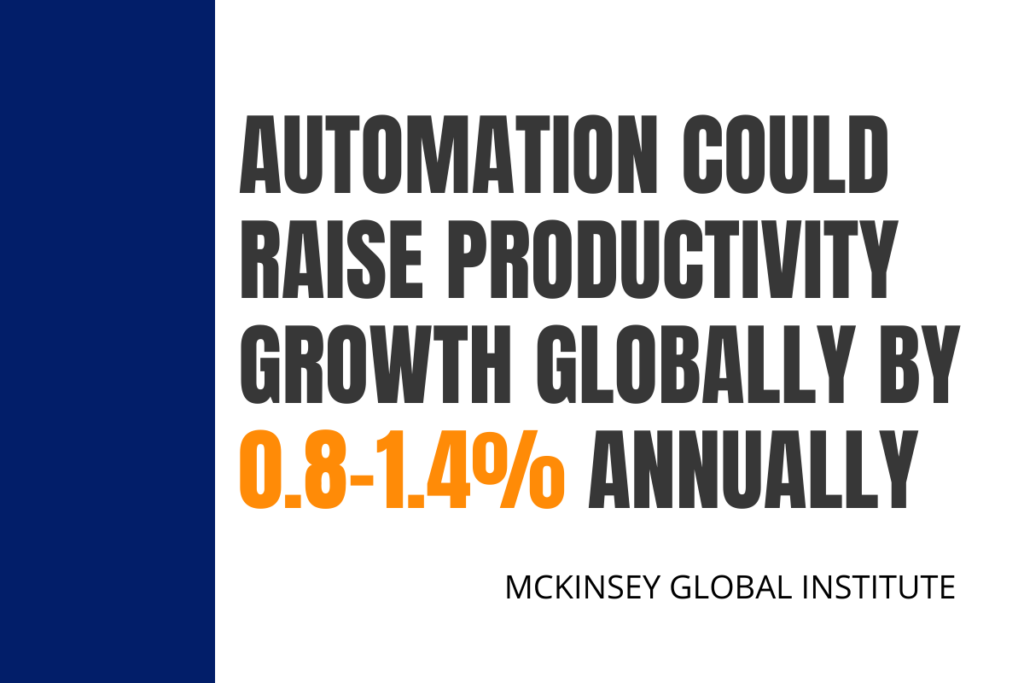
Upgrading a facility’s technology and automation processes requires planning, thought, and patience. These upgrades, though, should yield great returns on your investment over time. At Cherry’s Industrial Equipment we are here to answer your questions about automation and the best equipment design to serve your specific warehouse operation. We’re happy to share our thoughts on taking those next steps.
If you have questions and would like to discuss in more detail, please contact Cherry’s Industrial Sales Department at 877-350-2748 or email [email protected]. We’re here to help!
Sign up to our social media channels to be alerted of new blogs!
Cherry’s Industrial Equipment strives to positively impact the lives of everyday people, by engineered pallet handling solutions to improve safety and efficiency and to help achieve your goals, browse our selection of pallet inversion systems online to see what we offer, or reach out to discuss a custom solution. To request a quote or get more information, feel free to call us at 1-847-696-8889 or submit our online contact form.